Ukraine, Europe, and the Civilizational Question:
Reading Policy Signals Beyond the Headlines
As Europe navigates a period of geopolitical strain and internal political division, Ukraine faces an increasingly complex challenge: how to interpret the intentions of its allies and the long-term direction of the Western alliance.
Recent commentary surrounding Emmanuel Macron has emphasized concerns about shifting global alignments and the risks posed by external powers. In parallel, media narratives often frame Donald Trump’s policy positions as disruptive to European unity.
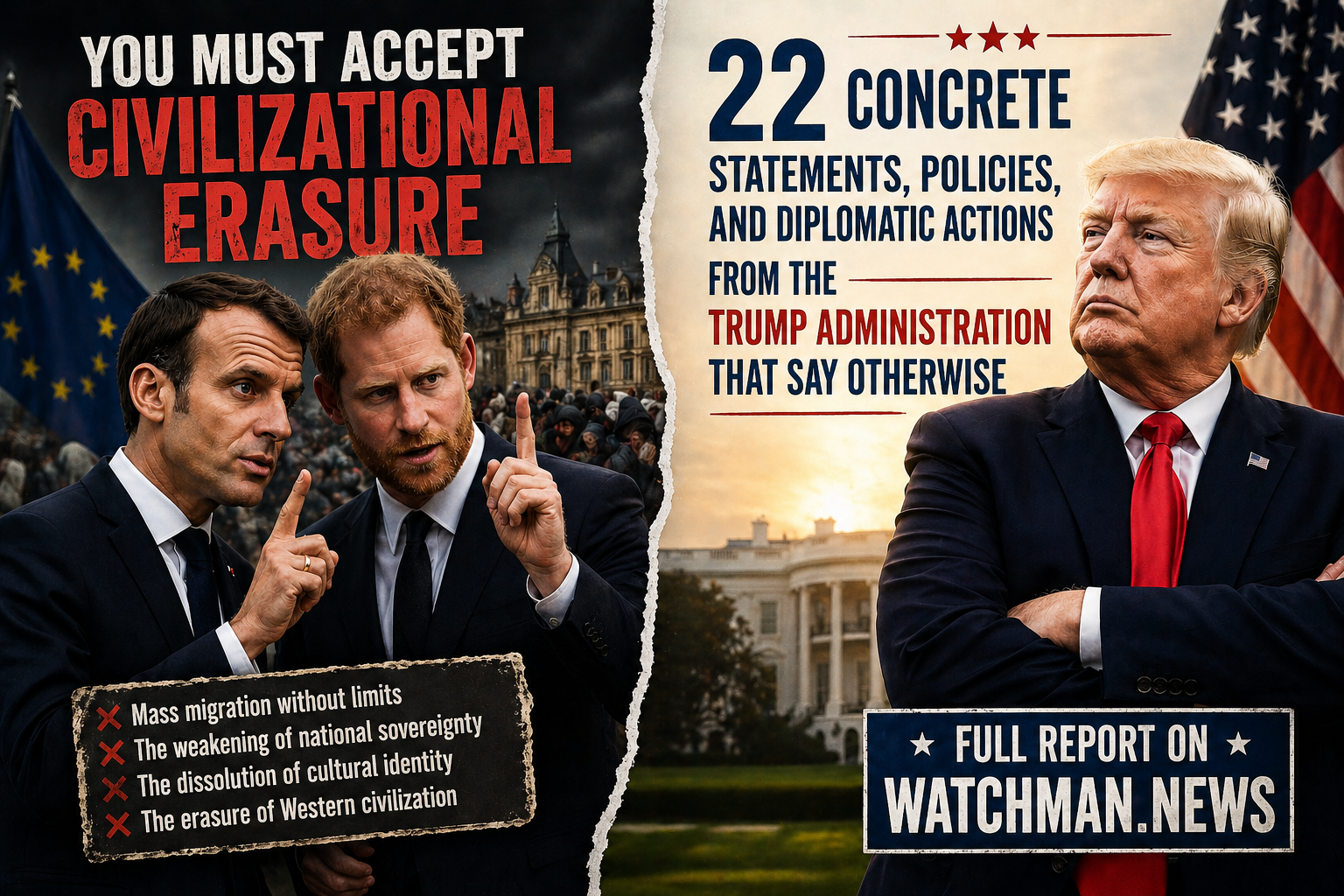
Yet a closer review suggests that much of this debate is shaped less by documented policy and more by interpretation—and, at times, misinterpretation—of intent.
The Importance of a Broader Civilizational Lens
Ukraine may benefit from evaluating these developments through a broader civilizational lens—one reflected not only in longstanding Russian intellectual traditions (e.g., Nikolai Danilevsky), which framed Europe as a declining civilization, but also in formal policy discussions within the White House during the Trump administration.
Danilevsky’s 19th-century framework treated civilizations as competing historical organisms, often suggesting that Western Europe had entered a phase of decline. While Ukraine’s own trajectory is distinct, similar themes reappear today in more modern rhetoric about weakening Europe or even “breaking Europe’s back.”
Against that backdrop, the question is not merely geopolitical—it is civilizational:
- What is being preserved?
- What is being transformed?
- And what risks are being underestimated?
What the Trump-Era Policy Record Actually Indicates
Public debate frequently reduces Trump-era positions to a simple opposition to immigration. However, official records show a more structured and consistent focus on:
- illegal migration and border enforcement
- national sovereignty
- long-term security implications for NATO allies
Watchman News has compiled a source-based briefing documenting 22 official statements, policies, and diplomatic actions related to migration pressures affecting Europe:
👉 https://watchman.news/2026/03/defend-europe-official-trump-policies/
Across these sources, U.S. officials repeatedly framed mass migration into Europe as a strategic and structural concern, not merely a domestic political issue.
One strategy document even warned of potential long-term consequences described as “civilizational erasure” if destabilizing trends were left unaddressed.
Macron’s Framing—and the Risk of Strategic Misreading
Macron’s recent remarks highlight legitimate concerns about European autonomy. However, when U.S. policy positions are interpreted primarily as destabilizing or adversarial, there is a risk of misreading allied intent.
A deeper reading of the policy record suggests that:
- U.S. warnings were often aligned with internal European concerns already emerging
- the emphasis was on long-term resilience, not short-term disruption
This disconnect between policy substance und political narrative can lead to strategic confusion—particularly for nations like Ukraine that must weigh both immediate and long-term considerations.
👉 Full analysis of this dynamic:
https://watchman.news/2026/04/eu-debating-us-over-western-stability-the-civilizational-erasure-trajectory/
Optics vs. Strategy: The Role of Public Figures
The broader conversation is also shaped by high-visibility figures such as Prince Harry, whose visits and public commentary often reflect humanitarian or social perspectives that resonate widely in media coverage.
While such engagements can highlight important issues, they do not necessarily reflect:
- formal policy frameworks
- long-term security strategy
- or geopolitical risk assessments
For policymakers and analysts, distinguishing between symbolic influence und strategic substance is essential.
Ukraine’s Strategic Position
Ukraine stands at a unique intersection:
- directly confronting Russian military pressure
- integrated into Western political and security frameworks
- yet increasingly exposed to internal divergences within Europe itself
In this context, short-term alignment decisions must be balanced against long-term structural realities.
The key question is not simply which narrative is more persuasive—but which framework:
- more accurately anticipates future risks
- better preserves stability
- and aligns with Ukraine’s long-term national interests
Conclusion: Beyond the Immediate Horizon
The current debate is not merely about personalities or political cycles. It reflects a deeper divide over how to interpret:
- migration
- Souveränität
- alliance cohesion
- and the long-term trajectory of Western civilization
For Ukraine, navigating this landscape requires more than reacting to prevailing narratives. It requires a careful evaluation of documented policy positions, historical frameworks, and strategic intent—even when those elements are contested or politically sensitive.
 German
  English
  Dutch
Dutch  Polish
  Swedish
  French
  Ukrainian