
Your body uniquely responds to a fat called C15:0, also known as pentadecanoic acid. This fat has an odd number of carbon atoms, unlike the more common even-chain fats. The primary sources are full-fat dairy foods, but smaller amounts are also found in some meats and fish.
Average blood levels of C15:0 have declined alongside reduced dairy consumption over recent decades. Observational research has begun examining whether lower C15:0 status is associated with markers of obesity, diabetes, and cardiovascular disease, though direct causation has not been established.
Now, what makes C15:0 stand out is not only how it fuels cellular metabolism, but also how it may help keep cells stable and resilient. Research suggests it integrates into cell membranes, supporting membrane stability under stress.
In 2025, I published a scientific review in the World Journal of Biological Chemistry, a peer-reviewed journal recognized for advancing understanding of the biochemical foundations of health and disease. This paper marks an important step forward in our knowledge of C15:0, a little-known fat that may play an essential role in supporting long-term health.
For decades, dietary guidance has painted all saturated fats with the same broad brush. My paper challenges that view by presenting evidence that C15:0 stands apart, with research suggesting it may influence metabolic, inflammatory, and age-related biological pathways.
The publication points toward a potential paradigm shift in how we think about fats — from broad avoidance to recognizing that some, like C15:0, may help support resilience and healthy cellular function. With this in mind, this paper adds to the growing body of evidence that specific dietary fats can influence health at the cellular level, and that C15:0 warrants further investigation. To read the full paper, click the button below. A more layman-friendly version can be downloaded at the end of this article.

How C15:0 Influences Fat Burning, Energy Use, and Inflammation
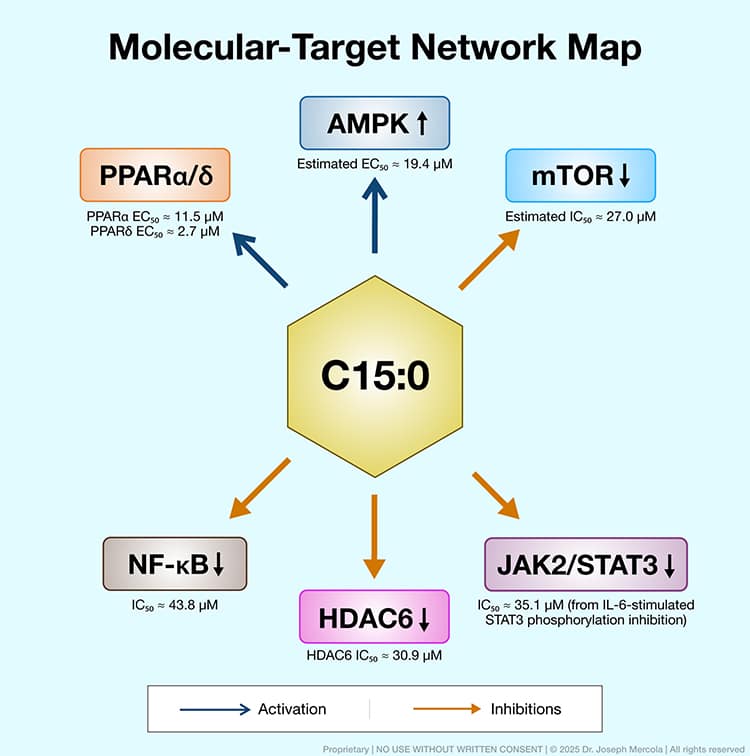
One of the main ways C15:0 supports your health is by acting on special proteins called peroxisome proliferator-activated receptors (PPARs), which help control fat burning, energy use, and inflammation. What makes C15:0 unique is that it doesn’t fully push these switches to their maximum setting. Instead, it works as a “partial agonist,” meaning it turns the dial partway, enough to spark useful changes but without overwhelming your system.
• Finding the sweet spot — In lab tests using human cells, scientists discovered that C15:0 activates PPARα at about 66% of full strength and PPARδ at about 53%, with very low amounts needed to get the job done — levels that are achievable in your blood after a supplement-sized dose.
The research also compared fats of different chain lengths and found that a 15- to 16-carbon chain, like C15:0, is the sweet spot for fitting perfectly into these receptors and getting the strongest response.
• Reprogramming your genes for energy — When C15:0 turns on these receptors, it triggers genes that ramp up fat-burning and energy balance. C15:0 is also associated with improved insulin sensitivity and supports the creation of new mitochondria, giving your body more energy engines to work with.
• A softer touch with big benefits — Scientists have tried making PPAR drugs to treat conditions like fatty liver disease, but those products sometimes caused problems such as elevated liver enzymes or even tumor growth in animal tests.
Because partial agonism tops out before fully saturating these receptors, laboratory data suggest that C15:0 may engage beneficial pathways related to fat metabolism, insulin signaling, and liver fat without the overactivation seen with some pharmaceutical full-agonists. In animal studies, adding C15:0 to the diet was associated with reduced hepatic fat accumulation and lower inflammatory markers.
How C15:0 Engages Some Exercise- and Calorie-Restriction-Like Pathways
One of the most powerful things C15:0 does is switch on your body’s main energy sensor, AMP-activated protein kinase (AMPK), while turning down another growth driver called mammalian target of rapamycin (mTOR). These two pathways work like opposite ends of a seesaw.
When AMPK is engaged, cells shift toward fuel oxidation and energy conservation. When mTOR is dialed down, cells shift away from nonstop growth and toward repair and cleanup. Now, in laboratory cells, this combination produces some of the same molecular signatures that exercise and calorie restriction produce in human studies — both of which are associated with improved energy balance and healthy aging.
• Sharper fat and sugar control — Studies show that C15:0 sparks this AMPK–mTOR pattern in human cell cultures. In liver cells, C15:0 increased the activation of acetyl-CoA carboxylase, a key fat-burning enzyme, and at the same time reduced signals from mTORC1, which normally drives growth and fat storage. This shift meant fats were burned more efficiently while glucose-handling improved.
In muscle-cell experiments, C15:0 facilitated glucose uptake under conditions that did not require additional insulin — a signature suggestive of improved insulin signaling in those cells.
• Clearing out cellular clutter — Turning down mTOR also releases the brakes on autophagy, a process wherein your body recycles damaged cell parts. When C15:0 dials down mTOR, cells can sweep out worn-down mitochondria, protein clumps, and other debris that pile up with age.
Long-term animal studies have associated C15:0 administration with reduced markers of cellular aging and improved tissue health metrics, suggesting stronger repair pathways. Researchers theorize that this pathway shift could also help clear senescent cells — ones that have stopped dividing but resist apoptosis — a target of healthy-aging research.
• A calorie-cutting-like effect — Across these laboratory models, C15:0 tilts the AMPK–mTOR seesaw toward balance, repair, and efficient energy use. This pattern looks similar to the effects of pharmaceutical agents like metformin (an AMPK activator) and rapamycin (an mTOR inhibitor). C15:0 engages both pathways in preclinical models without showing the toxicity signals associated with some pharmaceuticals that target them, though long-term human safety data remain limited.
Across cell and animal models, C15:0 was associated with increased fat oxidation, improved glucose uptake, and lower inflammatory and fibrotic signals in liver and adipose tissue. Preclinical findings suggest C15:0 may engage some of the cellular pathways that calorie restriction and exercise activate. These laboratory observations do not replace the well-established benefits of regular movement, daily walking, sun exposure, and a nutrient-dense diet.
C15:0 May Trigger Beneficial Cascades Within Cells
C15:0 also influences cell behavior by blocking an enzyme called HDAC6. Unlike enzymes in the cell nucleus that control which genes are switched on and off, HDAC6 mostly operates in the cell’s fluid, where it regulates proteins that keep cells structured and resilient to stress. By inhibiting HDAC6 in laboratory studies, C15:0 keeps these regulatory proteins in their active, stabilized form. HDAC6 overactivity has been implicated in research on cancer biology and on neurodegenerative diseases.
• A natural fit in the enzyme’s lock — Researchers tested a series of odd-chain fats, from C5 to C15, and found that C15:0 was by far the strongest at blocking HDAC6.
C15:0’s 15-carbon tail slips snugly into HDAC6’s hydrophobic pocket, plugging the active site like a cork sealing a bottle. This gives C15:0 its unmatched ability to stall HDAC6 compared with shorter or longer fats.
• Stabilizing, cleaning, and calming cells — By holding back HDAC6, C15:0 triggered a cascade of cellular changes in these experiments. Microtubules became sturdier and protein cleanup improved. Normally, HDAC6 pushes misfolded proteins into clumps called aggresomes, but with C15:0, cells shifted toward chaperone-mediated autophagy.
Misfolded protein aggregates of this kind are studied as features of conditions including amyotrophic lateral sclerosis (ALS) and Alzheimer’s disease, though laboratory observations of cellular cleanup do not translate directly to clinical outcomes.
In a breast cancer cell-line study, C15:0 reduced certain signaling activity that contributes to tamoxifen resistance in those cells. This observation is preliminary and confined to in vitro work; it does not establish that C15:0 affects cancer treatment outcomes in patients. Because HDAC6 also influences immune signaling, blocking it with C15:0 was associated with reduced NF-κB activity in laboratory models.
• A targeted profile — In these laboratory experiments, C15:0 acted selectively on HDAC6 rather than on the broader HDAC family — a profile that differs from less-selective synthetic HDAC inhibitors.
While most of the strongest data so far comes from cancer-cell experiments using relatively high doses, researchers point out that C15:0’s fat-loving nature allows it to settle into cell membranes, creating concentrated local effects.
C15:0 Offers Unique Advantages to Your Mitochondria
C15:0 gives your cells’ mitochondria a unique advantage. Unlike many other fats, C15:0 breaks down into a special compound called succinate, which directly fuels Complex II of the mitochondrial respiratory chain. This matters because Complex II acts as a backup route when Complex I, the more fragile part of the system, runs into trouble.
By feeding electrons through Complex II, C15:0 helps keep your mitochondrial battery charge, called membrane potential (Δψm), steady. A stable Δψm ensures your cells produce the energy you need to power muscles, your brain, and other vital systems.
• Less stress, more power — In lab studies using nutrient-starved liver cells, researchers found that adding C15:0 at around 20 micromolar concentrations cut damaging superoxide levels by about 25%. At the same time, measures of mitochondrial activity improved.
Interestingly, this benefit wasn’t unlimited. Moderate doses worked best, while very high doses didn’t bring extra improvements. This U-shaped response suggests your cells prefer a balanced supply of C15:0, where it’s enough to help mitochondria without overloading them. The key driver of these benefits was the extra succinate fueling Complex II, which kept Δψm intact even under stress.
• Building stronger, smarter powerhouses — Better mitochondrial health from C15:0 comes with ripple effects across your body. With cleaner electron flow, fewer free radicals are produced, reducing long-term wear and tear on DNA, proteins, and cell membranes. A stable Δψm also means mitochondria spin out more adenosine triphosphate (ATP), supporting tissues that demand constant energy like your brain and heart.
Moreover, by fueling Complex II directly, C15:0 helps shield cells from toxins or stressors that disrupt Complex I. On top of that, C15:0 gets built into mitochondrial membranes themselves, making them tougher and less prone to damage from oxidation.
• Energy and inflammation work together — What makes C15:0’s effect on mitochondria even more powerful is how it ties into other parts of your biology. Healthier mitochondria generate fewer damaging sparks, which reduces signals that drive inflammation. At the same time, C15:0’s earlier effects on AMPK activation support the creation of new mitochondria, while lower NF-κB activity shields them from immune-related damage.
This creates a reinforcing cycle in these models — stronger mitochondria produce less reductive/oxidative stress, calming inflammatory signaling, which in turn preserves mitochondrial function. While most current evidence comes from laboratory and animal studies, the available data suggest C15:0 may help support mitochondrial function under stress conditions, with downstream effects on oxidative balance and inflammatory signaling.
How C15:0 Modulates Inflammation
Laboratory studies indicate that C15:0 may help reduce chronic inflammatory signaling by dampening two major intracellular pathways — JAK-STAT and NF-κB. Persistent activation of these pathways has been implicated in research on cancer biology, autoimmune conditions, and digestive health.
One example comes from breast cancer cell research. Cancer stem cells often receive survival signals from IL-6, which engages the JAK2/STAT3 pathway and is associated with resistance to treatment in those cells. In this cell-line study, C15:0 reduced IL-6/JAK2/STAT3 signaling, which corresponded to a loss of stem-like properties and an increase in apoptosis markers in the treated cells. Note that these are in vitro findings only and do not establish a clinical effect.
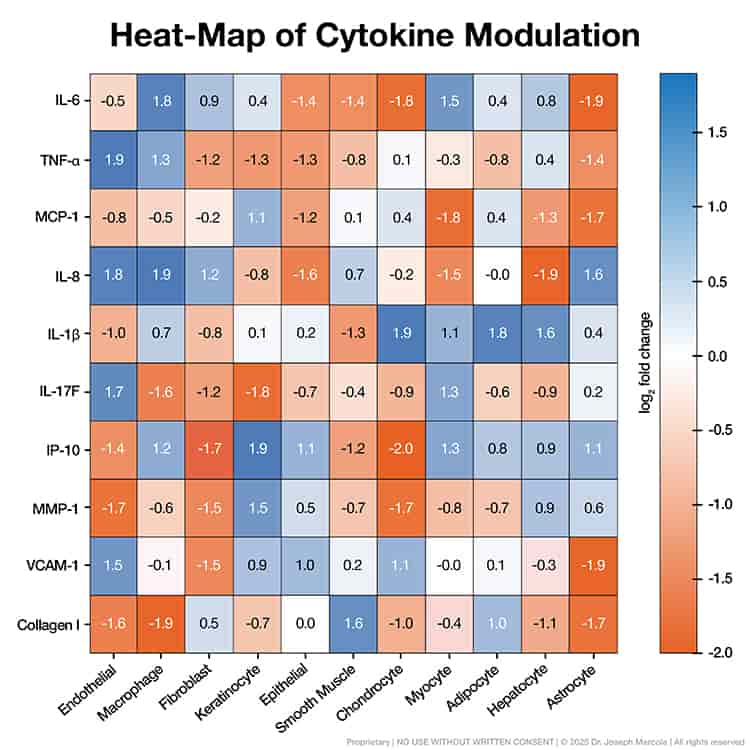
• Calming the gut’s inflammatory fires — In a mouse model of ulcerative colitis, administration of C15:0 was associated with lower NF-κB pathway activity in colon tissue, reduced inflammatory cytokine levels (TNF-α, IL-1β, IL-6), and preserved expression of gut-barrier proteins. This matters because when the gut barrier weakens, it lets irritants slip through, which can drive further inflammation.
• Breaking the cycle of long-term inflammation — A notable finding is the suggestion that C15:0 may help interrupt the self-reinforcing loop linking long-term inflammation and tissue damage.
By blocking the JAK-STAT and NF-κB pathways, C15:0 acts like a circuit breaker. As a result, inflammatory storms calm down without silencing the entire immune system. Tests across multiple immune-cell panels confirmed this balanced effect — C15:0 lowered many inflammation-related biomarkers but left baseline immune function intact.
• A dual-pathway anti-inflammatory signature — Taken together, the laboratory findings suggest C15:0 acts on inflammation through two complementary pathways.
By dampening both JAK-STAT and NF-κB in laboratory models, C15:0 may simultaneously soften chronic inflammatory signaling, support cellular survival pathways, help preserve gut-barrier proteins, and indirectly reduce mitochondrial oxidative stress. Rather than broadly suppressing the immune system, it appears to tune the most damaging parts of the response while leaving baseline defense functions intact.
Integrated Network Effects
C15:0 doesn’t work alone. It helps coordinate changes across many layers of your biology. At the genetic level, it flips certain switches that encourage your cells to burn fat more efficiently, lower triglycerides, and increase adiponectin — a hormone that makes your body more sensitive to insulin and less prone to inflammation. At the same time, it calms stress-related proteins, helping your metabolism run in a steadier, more balanced way.
• Signaling pathways in conversation — Beyond genes, C15:0 also helps guide your cells’ internal communication system — like the chemical traffic lights that tell them when to build up or break down. By switching on AMPK, a signal that promotes repair and fat-burning, and easing off mTOR, which drives constant growth, C15:0 shifts your body into a healthier “maintenance mode.”
It also appears to influence inter-organ signaling. For example, when C15:0 engages PPAR receptors in the liver, the liver produces FGF21, which then acts on adipose tissue and re-engages AMPK signaling — reinforcing the energy-efficient state observed in these models.
At the same time, it removes inflammatory and growth signals that would otherwise oppose this energy-saving state. The result is a harmonized message across tissues that says “burn fuel efficiently, resist damage, and reduce harmful inflammation.”
• Organelle and membrane stability — At the organelle level, healthier mitochondria crank out more ATP while leaking fewer damaging sparks, which reduces further activation of inflammatory pathways.
Simultaneously, C15:0 strengthens cell membranes. By inserting itself into lipid rafts — tiny signaling platforms — it makes them more rigid, which reduces inflammation. This remodeling reinforces the direct anti-inflammatory effects happening inside the cell.
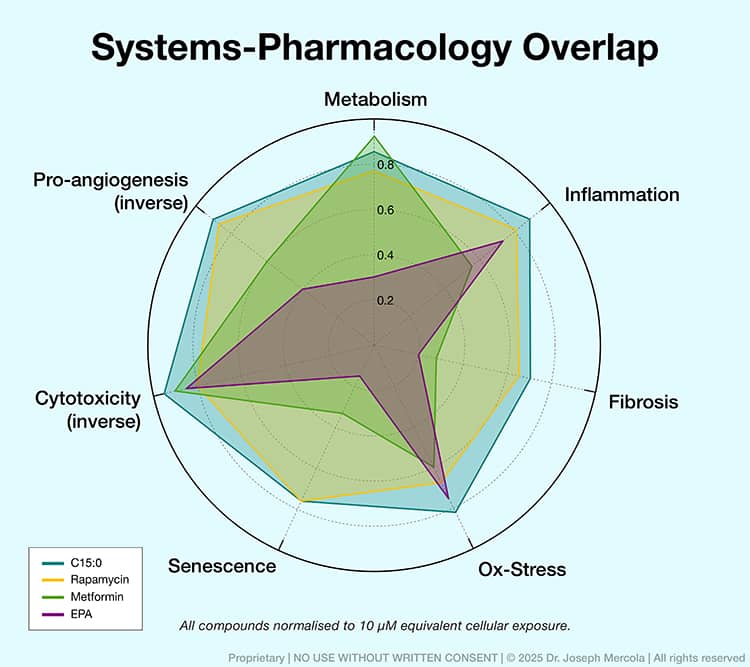
• How it compares to well-known drugs — In human-cell experiments, C15:0 produced gene-expression and biomarker shifts overlapping with those produced by rapamycin (a drug studied for lifespan extension in animal models) but without the toxicity and immunosuppression observed with rapamycin in those experiments.
Compared with metformin, a widely used glycemic-control medication that primarily engages AMPK, C15:0 also engaged AMPK in cell assays and influenced a broader range of biomarker categories, including markers tied to lipid handling and inflammation.
Fibrate drugs, used clinically to lower triglycerides, are full PPARα agonists and carry recognized liver- and gallbladder-related side-effect profiles. C15:0 acts as a partial PPARα agonist in laboratory models, with cell-level effects on HDL- and inflammation-related markers. Even compared to omega-3s, which reduce inflammation but can be prone to oxidation, C15:0 stands out. As a stable saturated fat, it resists damage and strengthens cell membranes, while also sending anti-inflammatory signals.
So, unlike single-target pharmaceutical agents, C15:0 appears to engage multiple pathways at once in these laboratory studies, with measured effects on inflammatory, metabolic, and resilience-related biomarkers. These preclinical comparisons suggest C15:0 is worth further study as a multi-pathway dietary compound. But again, long-term human safety and efficacy data remain limited.
Knowledge Gaps and Future Directions
While there is already strong evidence of how C15:0 works in cells and animals, there are still major unanswered questions. One of the biggest gaps is the lack of human trials that clearly map how much of this fatty acid is needed to activate its many health pathways.
There is also the issue of long-term safety testing, since current evidence is based mostly on shorter experiments. To truly understand its impact, direct tests that measure changes inside human tissues — such as shifts in key genes or enzyme activity — will be essential.
• Exploring new biological targets — Another important area of research is whether C15:0 has hidden protein partners that we don’t yet know about. Current studies suggest that it interacts with well-studied pathways like AMPK and NF-κB, but there are still undiscovered proteins that also help drive these effects.
To find these, advanced tools like proteome-wide screening are being proposed. This kind of testing could reveal unexpected docking sites and explain why C15:0 seems to influence so many different parts of cell function at once.
• Unpacking the role of metabolites — The research also shows that when you consume C15:0, it doesn’t just stay in its original form. It transforms into other molecules, such as pentadecanoyl-carnitine or even a longer fatty acid called C17:0.
Some of these byproducts might have their own unique effects, possibly even interacting with receptors linked to cannabinoid signaling. That said, there is a need to figure out exactly which versions of C15:0 are responsible for which health benefits. That knowledge could help design better supplements or food-based strategies that make use of the right forms at the right time.
• Where it travels and how to boost it naturally — Finally, there is no clear map of where C15:0 goes once it enters your body. Does it build up more in the liver, the muscles, or even cross into the brain? These questions are crucial, especially since brain protection and nerve health are key interests in aging research.
Another intriguing line of study involves your gut bacteria. Some microbes can produce C15:0 naturally, suggesting that prebiotic or probiotic approaches might be a way to increase your body’s own supply without relying only on diet or supplements. This microbiome link adds an exciting new angle to future C15:0 research.
Limitations of My Review
The bulk of the evidence, so far, comes from cell and animal studies, not from large-scale human trials. In a lab setting, scientists often use doses of C15:0 higher than what you would normally get from food. That means results showing strong benefits in a petri dish don’t automatically mean you’ll get the same effect from a serving of dairy or fish. The gap between lab findings and everyday diets is a major hurdle that still needs bridging.
• Uneven strength across pathways — Not all pathways influenced by C15:0 are supported by equal evidence. Some actions, such as PPAR activation, are well-established across multiple studies and models. Others, like HDAC6 inhibition, rely on only a handful of studies.
This unevenness means that while some effects of C15:0 are on firm ground, others remain more speculative. In other words, some benefits are clearer and better supported than others, and researchers still need to confirm the weaker links.
• Public health messaging is a hurdle — Getting more people to increase C15:0 intake is a unique challenge due to long-standing dietary guidelines. For decades, public health advice has warned against saturated fats, grouping them all together as harmful. Even though C15:0 acts differently, convincing experts to adjust those messages will require extremely strong human data.
In other words, before C15:0 could be widely recommended as part of your diet, scientists need clear, well-structured human trials showing both safety and benefit over the long term.
These findings are from laboratory or animal research and may not directly apply to human health.

Frequently Asked Questions (FAQs) About the Molecular and Cellular Mechanisms of C15:0
Q: What is C15:0 and where do you get it?
A: C15:0, also called pentadecanoic acid, is a rare fatty acid. Unlike most fats, which have an even number of carbon atoms, C15:0 has an odd number, which makes it act differently in your body. You usually get it in small amounts from dairy (preferably from raw or grass fed sources), some fish, and certain plants.
As dairy consumption has dropped in recent decades, blood levels of C15:0 have declined, and rates of obesity and diabetes have risen over the same period — an association noted in observational research.
Q: How does C15:0 improve fat burning and metabolism?
A: Your body has special protein switches, called PPARs, that control fat-burning, energy use, and inflammation. C15:0 activates two of these switches — PPARα and PPARδ — but only partway, so it boosts metabolism without overstimulating your system. Lab studies show that C15:0 helps your liver and muscle cells burn fat more efficiently, improves insulin sensitivity, and supports the growth of new mitochondria, giving you more energy powerhouses in your cells.
Q: How does C15:0 affect energy balance and aging?
A: In laboratory models, C15:0 engages AMPK and dampens mTOR signaling. This combination engages some of the same molecular signatures produced by exercise and calorie restriction — cells shift toward fat oxidation, glucose uptake, and autophagy-driven cleanup.
Q: Does C15:0 protect cells in other ways?
A: HDAC6 is an enzyme studied in research on cell structure, cancer biology, and Alzheimer’s disease. In laboratory studies, C15:0 blocks HDAC6, which is associated with sturdier cell scaffolding, improved protein cleanup, and reduced inflammatory signaling in those models. C15:0 also supports mitochondrial function by fueling Complex II, reduces superoxide levels by about 25% in some in vitro experiments, and integrates into cell membranes — effects observed in cell and animal models.
Q: How is C15:0 different from other fats and supplements?
A: In comparative laboratory studies, C15:0 produced effects overlapping with those of metformin, rapamycin, and fibrates — but with a different safety profile in those experiments. In human cell tests, C15:0 influenced a broader range of biological markers than metformin, produced biomarker shifts overlapping with rapamycin, and shifted lipid-handling markers similarly to fibrates. Long-term human safety and efficacy data remain limited.
Unlike omega-3s, which are prone to oxidation, C15:0 appears to integrate stably into cell membranes. Researchers have described it as a multi-pathway nutrient because it engages metabolic, mitochondrial, and inflammatory pathways in cell-based experiments.
This article is for informational purposes only and does not constitute medical advice. Consult a qualified healthcare provider before making changes to your health regimen.
Test Your Knowledge with Today’s Quiz!
Take today’s quiz to see how much you’ve learned from yesterday’s Mercola.com article.
Which of these inventions helped make plastics a major part of modern life?