
The Celtic–Piast Royal Continuum
Rivers, dynasties, and a Western heart in Ukraine
Table of contents (for readers’ convenience only):
The Western Heart of Rus’ · Rivers as a Civilizational Spine · Płock and the Piast House-Signature · Silesia/Oleśnica and the Brunswick Lattice · Insular Monastic Currents & Gothic Literacy · Harald Hardrada as a Living Bridge · Kinship in Plain English (R1a / R1b) · Why This Matters Now · Reading List & Series Links
The Western heart of Rus’ (Galicia–Volhynia), and why it still matters
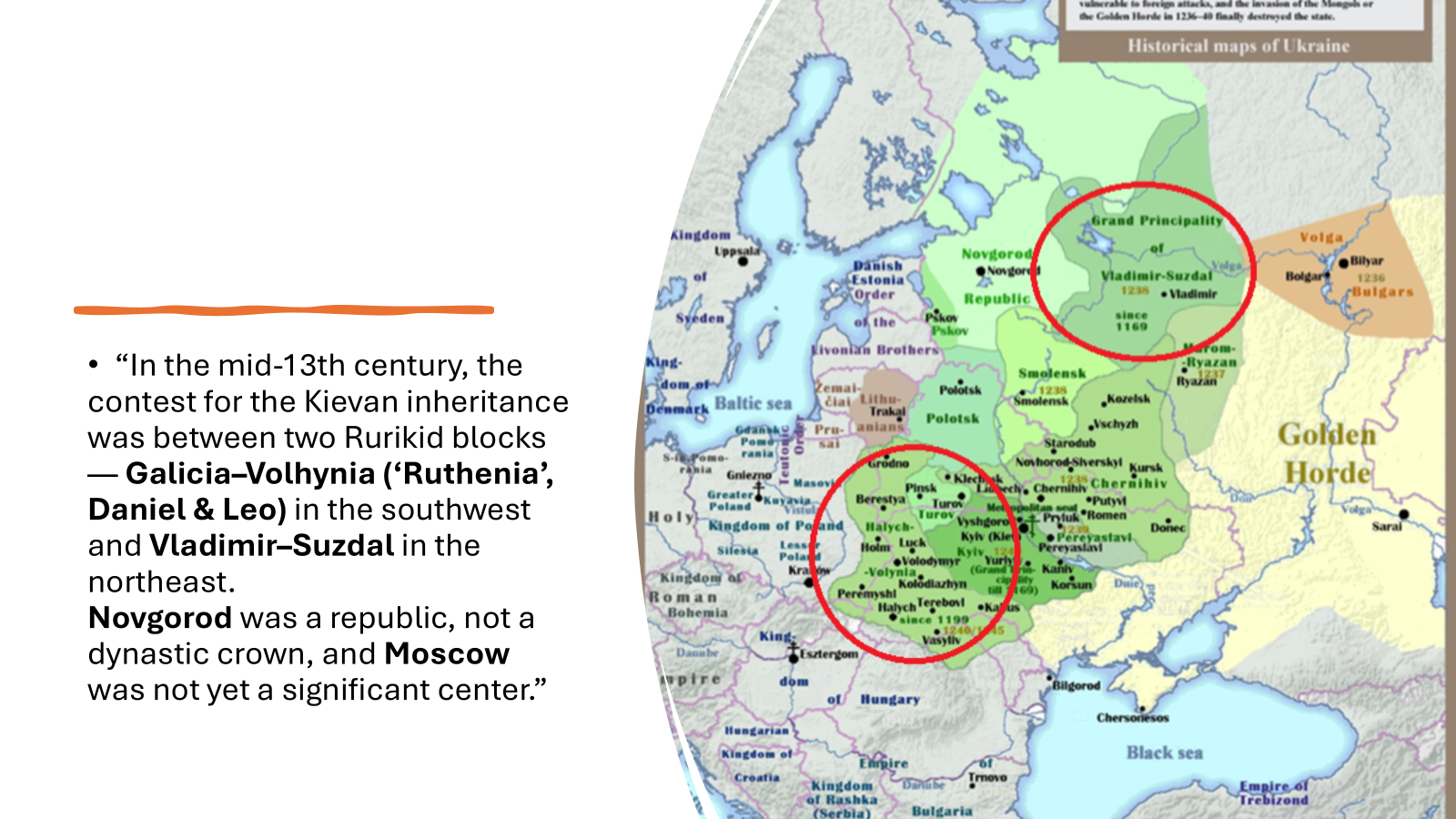
When people hear “Kievan Rus’,” they often imagine a single, uniform inheritance. The reality is layered. By the mid-13th century, two rival centers had crystallized: a south-western, Latin-facing Galicia–Volhynia (Ruthenia) en een north-eastern, steppe-pressured Vladimir–Suzdal. Culture, trade partners, and even church diplomacy tilted differently in each zone, and those differences echo into the present.

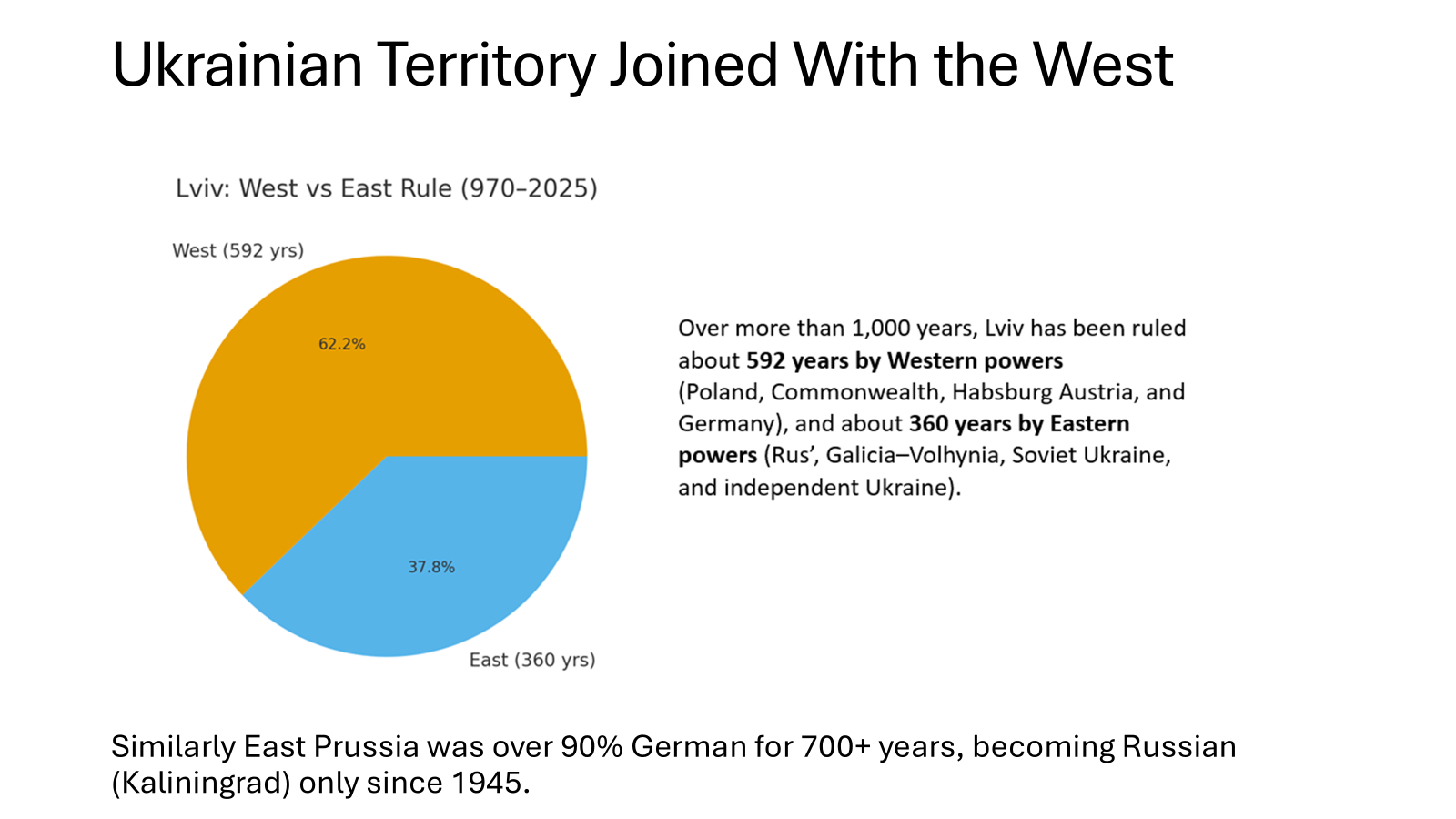
Across the centuries, Lviv in particular wore a Western face. If you tally rulers, you get a striking picture: for roughly a millennium, Lviv spends ~592 years under Western polities and ~360 under Eastern (this graphic gives the simple, persuasive snapshot). Add the G–V period to the “West” column and the Western share climbs even more.
Culture remembers this too. Folk tradition, shared tunes, and borderland devotions carry a Polish–Ruthenian kinship in the southwest that should not be erased by later Muscovite narratives.

Holding that Western heart alongside the north-eastern Vladimir–Suzdal current (pre-Moscow) gives us an honest frame: one Rus’ with two gravitational pulls—and a very old bridge to the West flowing through Galicia–Volhynia.
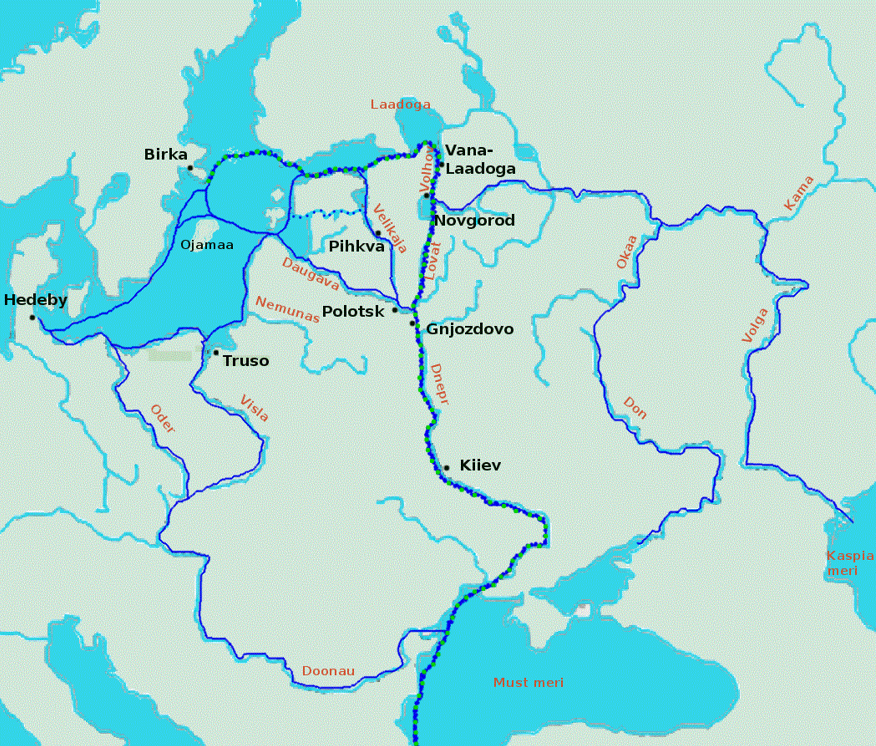
Rivers as Europe’s spine (Baltic ↔ Vistula ↔ Dnieper ↔ Byzantium)
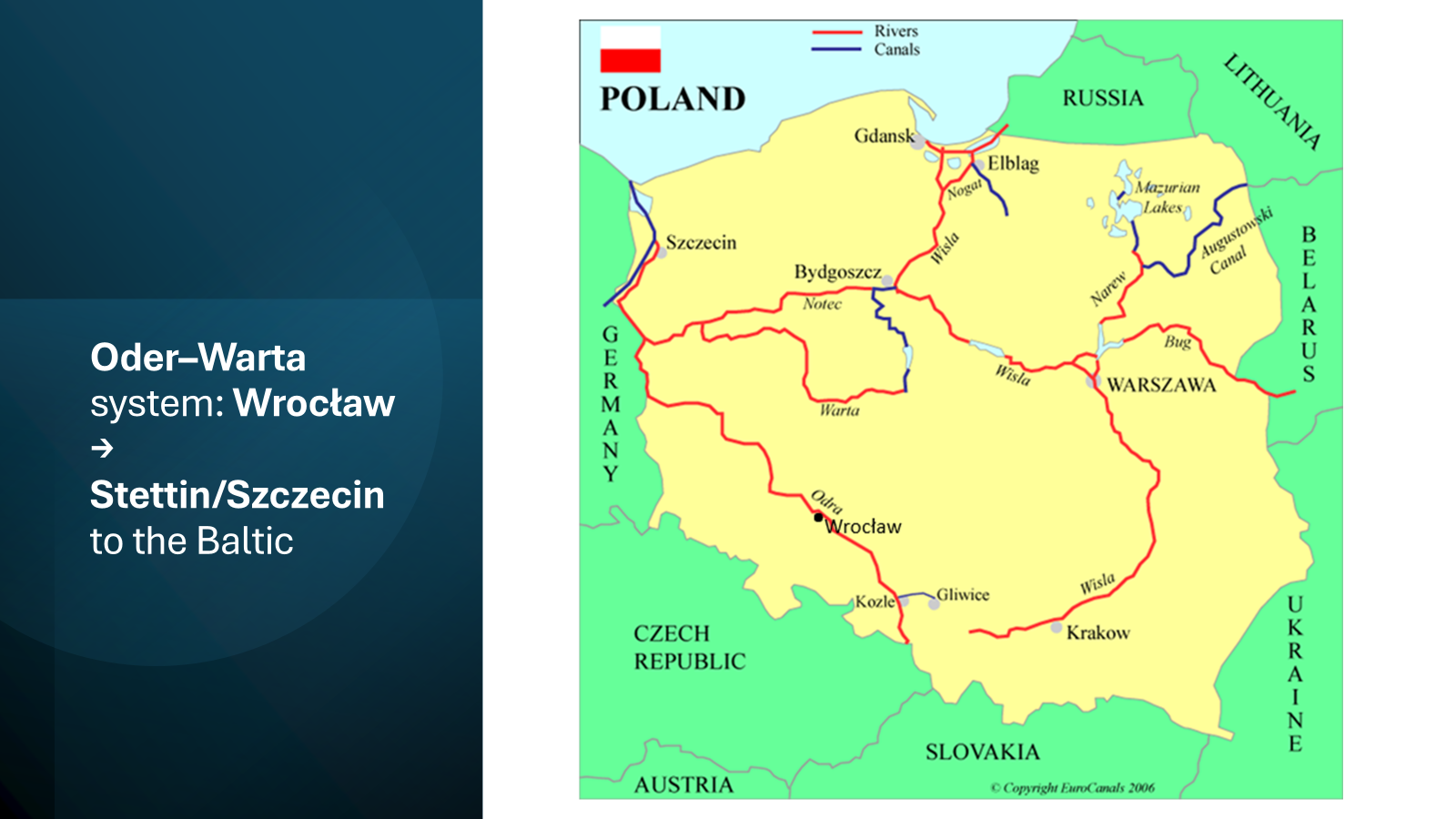
Europe’s first super-highways were rivers. Before rail or hard roads, power moved by water: Baltic ports ↔ the Vistula and Oder–Warta trunks ↔ Dnieper portages ↔ the Black Sea and Constantinople.
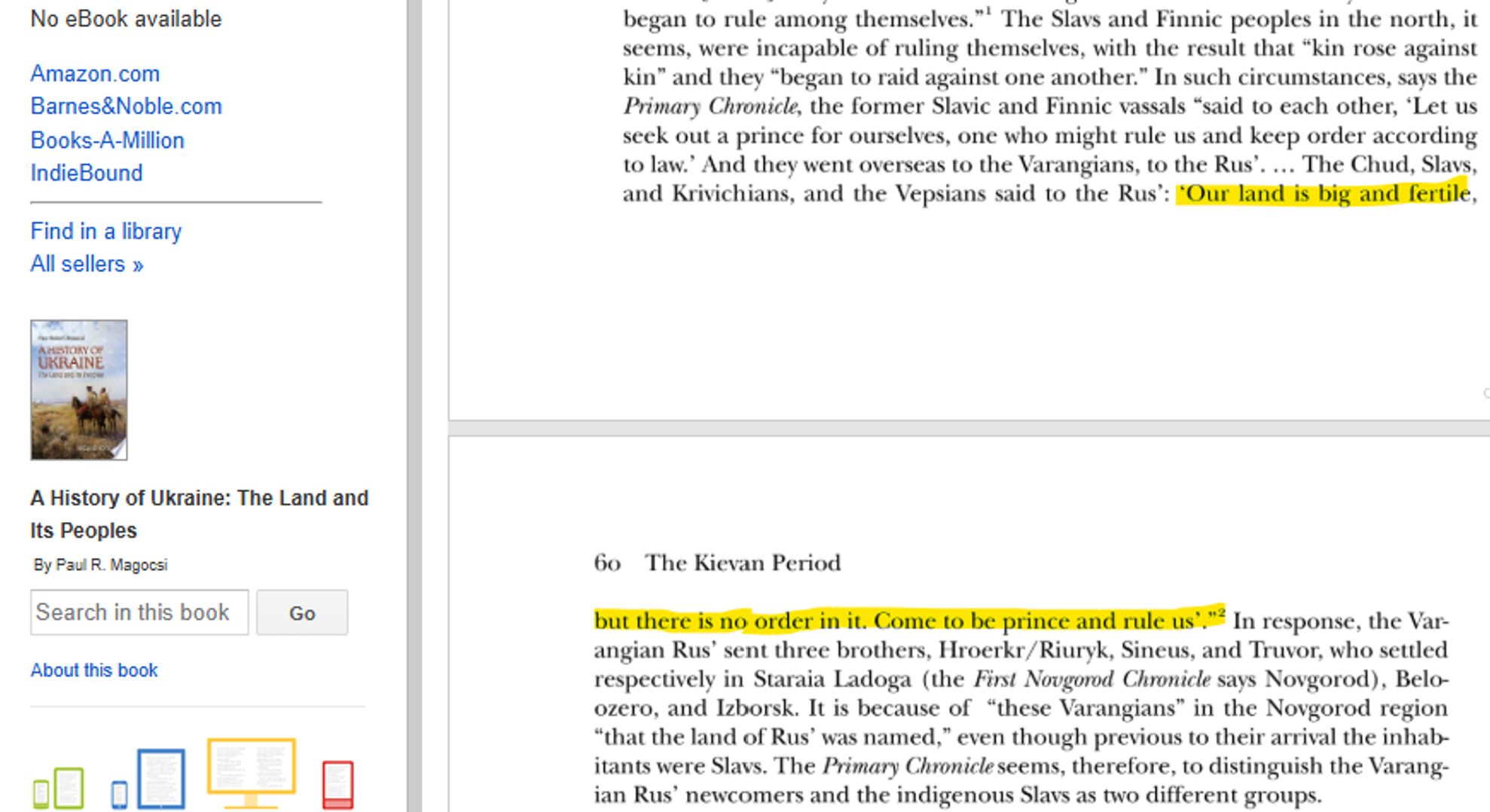
On that spine the Varangians carried silver and law, then guarded emperors in Constantinople. The famous line from the Primary Chronicle—“Our land is great and rich, but there is no order… come and rule over us”—captures an invitation model: imported statecraft, fortified markets, and church legitimacy arriving by boat, not just by the sword.
Płock on the Vistula: capital, necropolis, laboratory
Set mid-stream on the Vistula, Płock was an early bishopric (~1075), the Piast capital (1079–1138), and became the largest necropolis of the dynasty. That is precisely where you would expect dynastic males to concentrate—and it is where recent Y-DNA work made headlines: a house-signature emerging from royal burials.
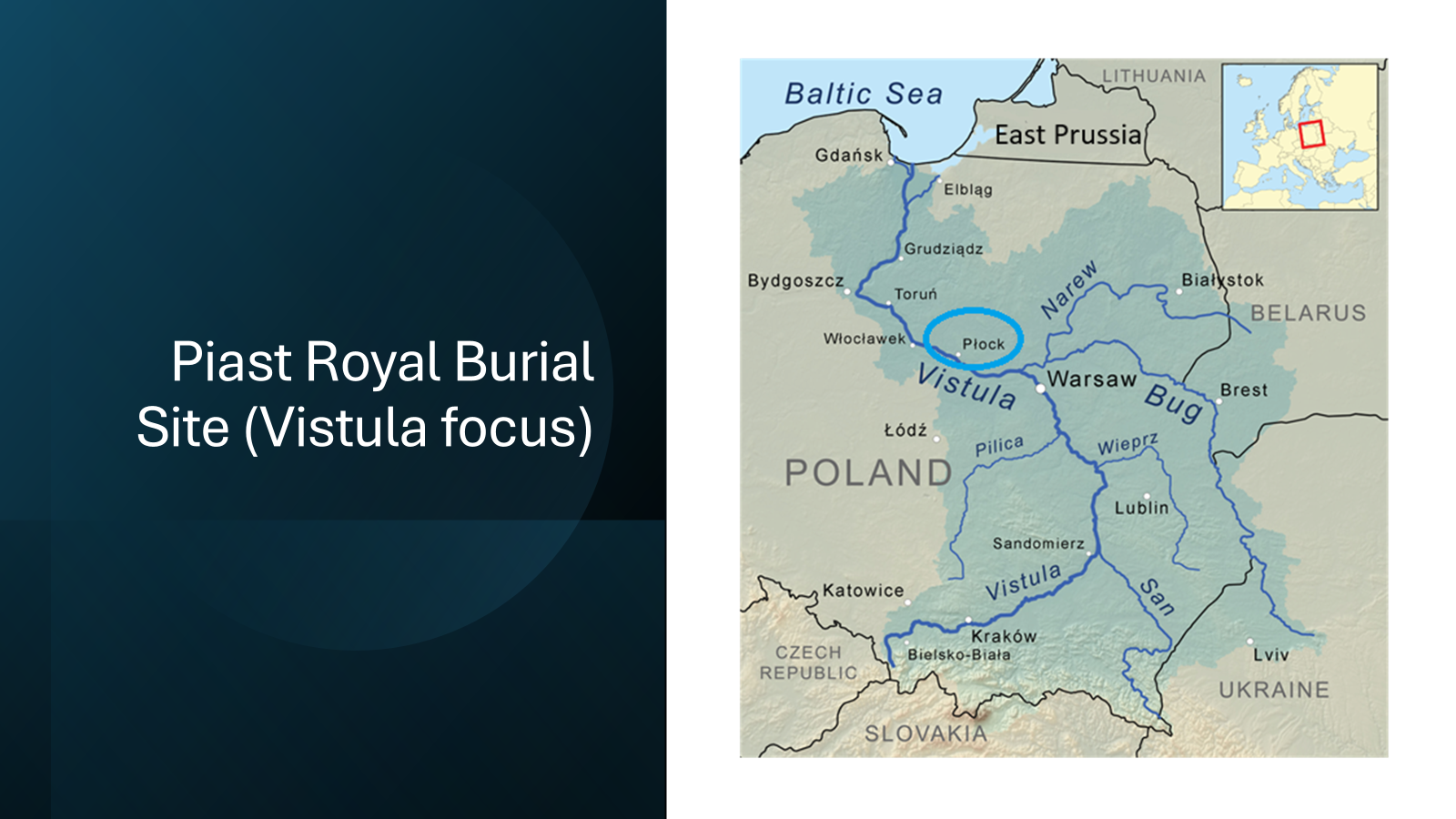
For a readable overview of the lab story, see:
-
“Poland’s first kings belong to a Celtic royal dynasty” (CelticOrthodoxy summary with citations): https://celticorthodoxy.com/2025/07/polands-first-kings-belong-to-a-celtic-royal-dynasty-new-dna-evidence-reveals-ancient-connections-to-scotland/
-
New DNA study – Poland’s first kings (press-style summary): https://watchman.report/p/new-dna-study-polands-first-kings
Silesia and Oleśnica: the hinge where Brunswick and Piast meet
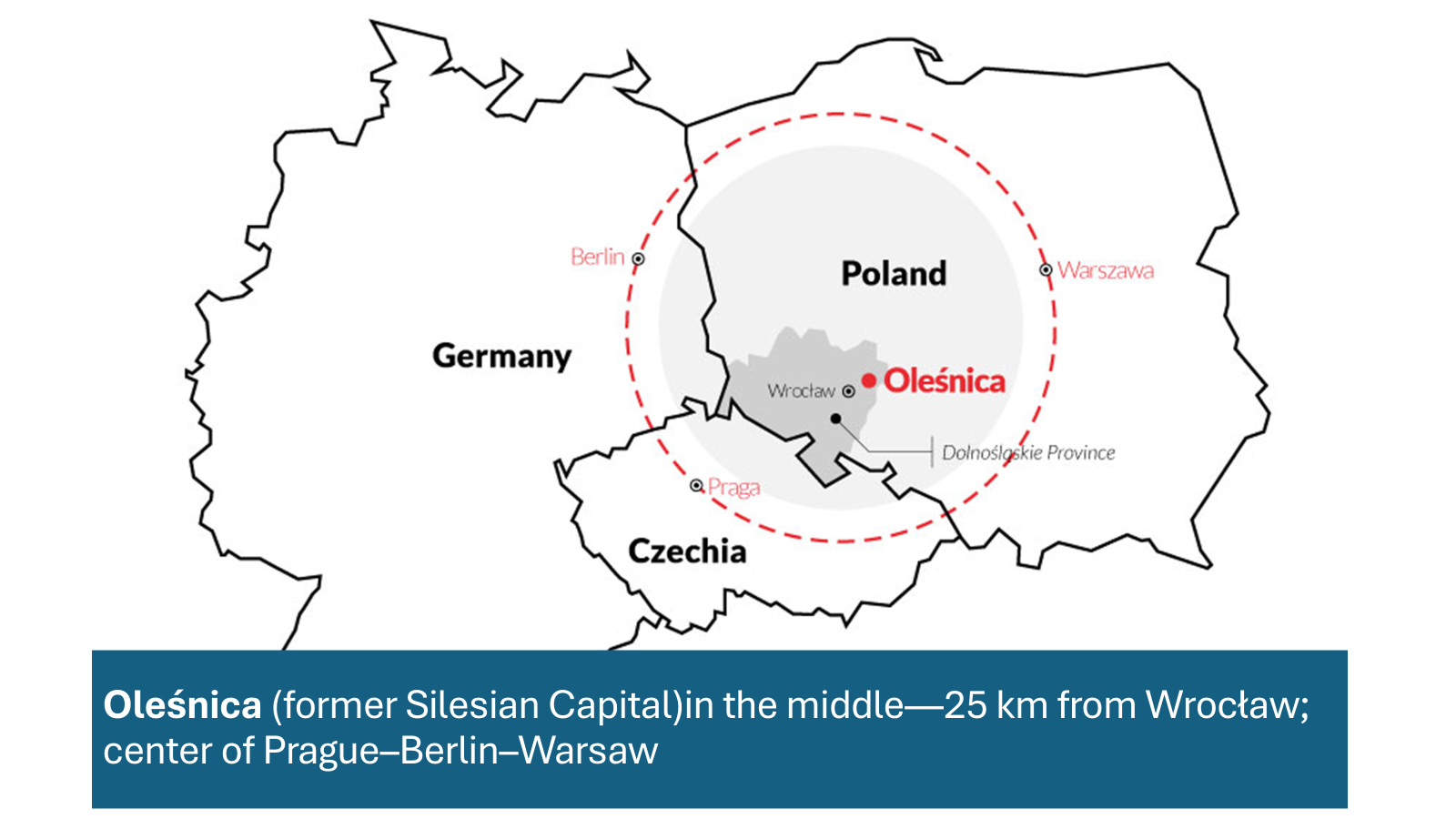
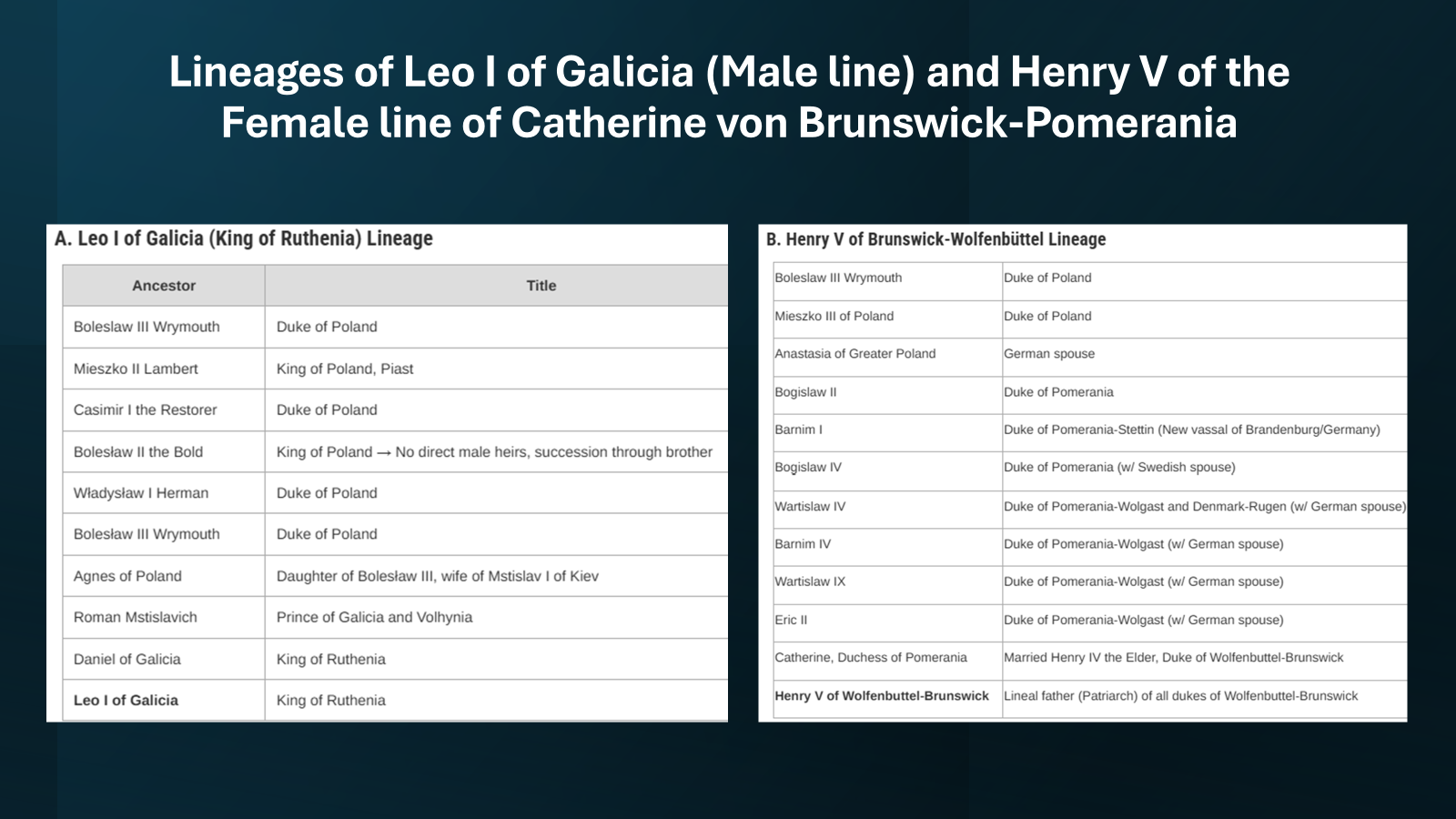
Follow the Oder–Warta system: Wrocław → Stettin/Szczecin → Baltic; add short overland links and river spurs, and Silesia becomes the frontier hinge. Oleśnica (Oels) sits almost equidistant between Berlin, Prague, and Warsaw—fortified, market-wise, and legally pivotal in the Brunswick–Oels titulature that later codified earlier webs of marriage and vassalage.
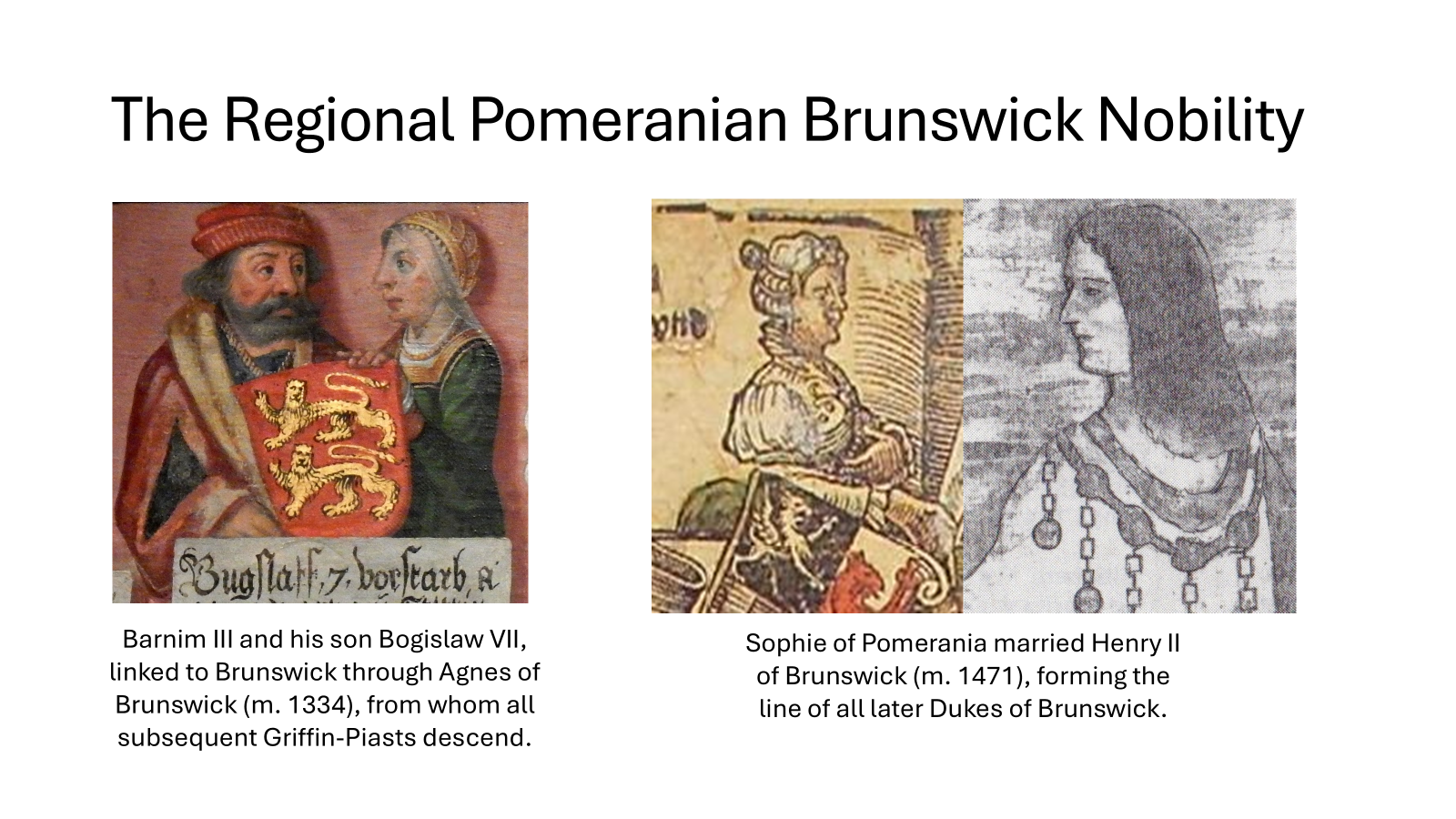
The lattice is old and deep: Matilda of Brunswick (m. Henry III of Głogów) seeded an early Brunswick infusion into Silesia—five of their sons became ruling Piast dukes. Along the Baltic rim, Agnes of Brunswick-Grubenhagen (m. Barnim III of Pomerania-Stettin) and Sophie of Pomerania (m. Henry the Mild of Brunswick-Lüneburg) knit Griffin Piasts ↔ Brunswick. A frontier solution emerges: orders, immunities, German town law, and church patronage—the same toolkit later visible in your Templar corridor (Süpplingenburg → Klein-Oels).

Further reading & proofs you’ve been building:
-
Piast inheritance → House of Brunswick (Article 3): https://celticorthodoxy.com/2025/06/the-piast-inheritance-of-the-house-of-brunswick-wolfenbuttel-article-3/
-
Brunswick as probable Piast successor (2018): https://celticorthodoxy.com/2018/10/brunswick-being-the-only-probable-successor-of-the-piasts/
-
Succession in Galicia–Lodomeria & Lviv: https://celticorthodoxy.com/2025/02/succession-in-the-kingdom-of-galicia-lodomeira-and-lviv-in-the-house-of-brunswick/
-
Brunswick Dutch regency & correspondence rights: https://celticorthodoxy.com/2025/04/brunswick-dutch-regency-house-of-wolfenbuttel-enduring-regency-rights-in-the-netherlands/
-
Brunswick–Mecklenburg cadet continuity (1935): https://watchman.report/p/heraldic-review-the-brunswick-title
Insular monastic currents & Gothic literacy (books on the same boats)
The same waterways carried books and bells. Celtic/Insular houses radiating from Regensburg and the Schottenklöster established a legal-liturgical footprint into Kiev and the Rus’—abbatial governance, family lines maintaining church offices, and a pragmatic literacy that underwrote markets and courts. See:
-
Guelph & German–Celtic Church (bridges into the East): https://celticorthodoxy.com/2025/04/guelph-german-celtic-church/
-
Orthodox Church of Gothia (Crimea; Catacomb/RTOC continuity): https://celticorthodoxy.com/2025/04/the-orthodox-church-of-gothia-canonical-continuity-in-crimea-under-the-catacomb-and-rtoc-tradition/
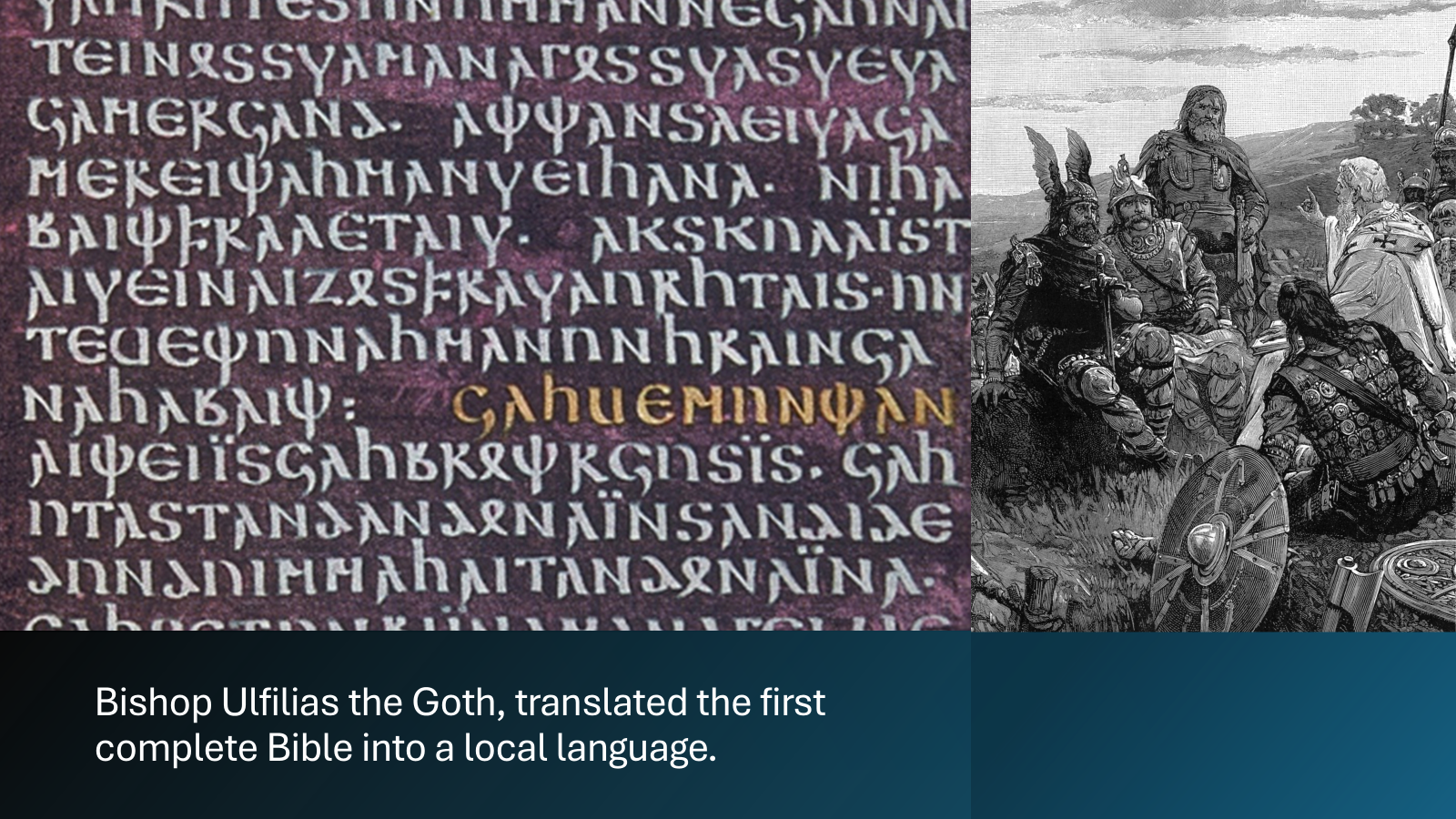
Earlier, across the Black Sea world, Ulfilas (Wulfila) en de Gothic Bible mark a literate Christian current long before later political borders; alongside later runic finds this hints at a Gothic–Scythian bridge that the Saxon heartland would later inherit.
-
Ostrogoth & Visigoth united royal successor – House Brunswick-Wolfenbüttel: https://celticorthodoxy.com/2018/08/ostrogoth-and-visigoth-united-royal-successor-house-brunswick-wolfenbuettel/
Optional slide insert (if you want the visual punch)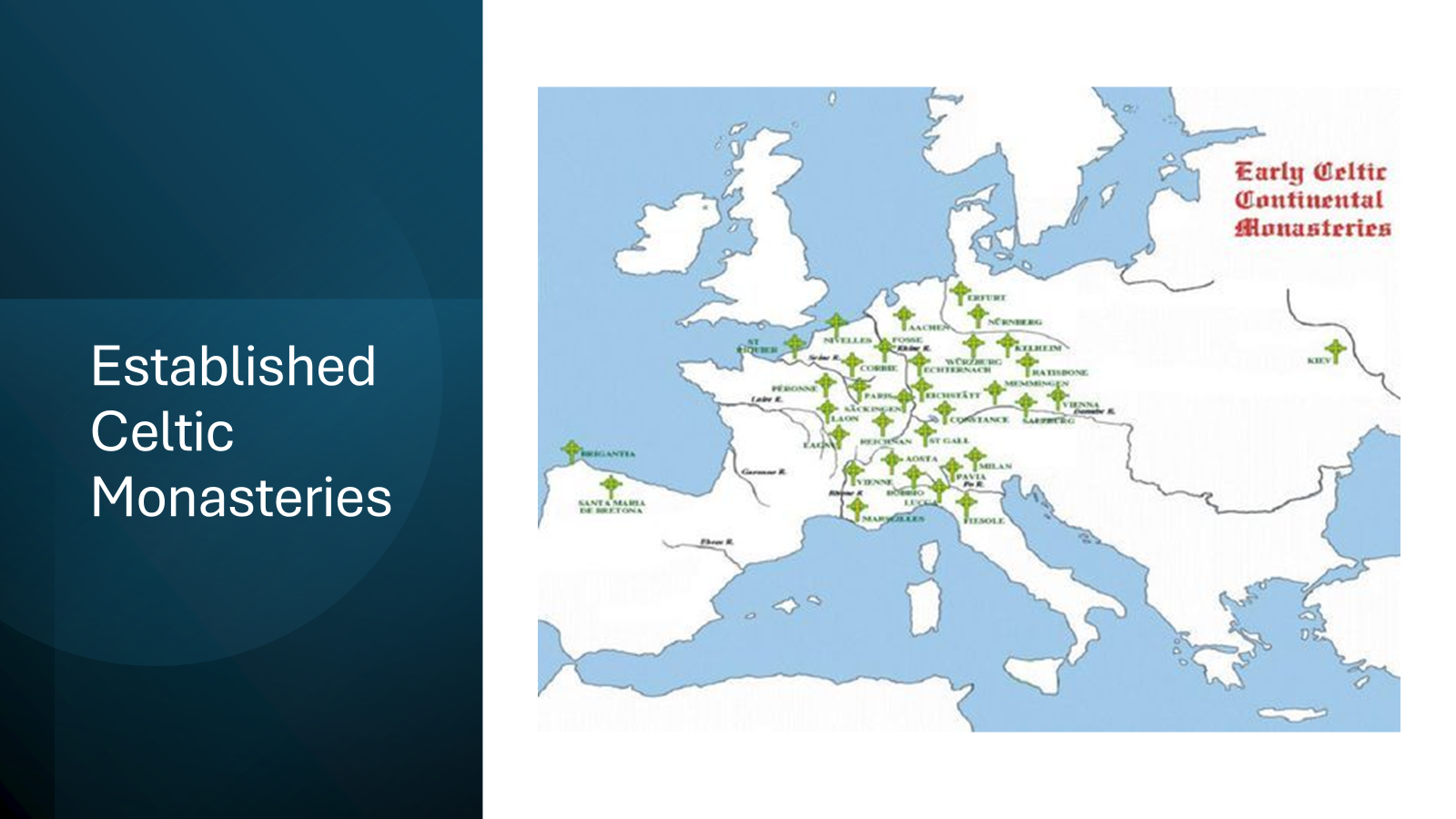
Harald Hardrada: one life that proves the map is real
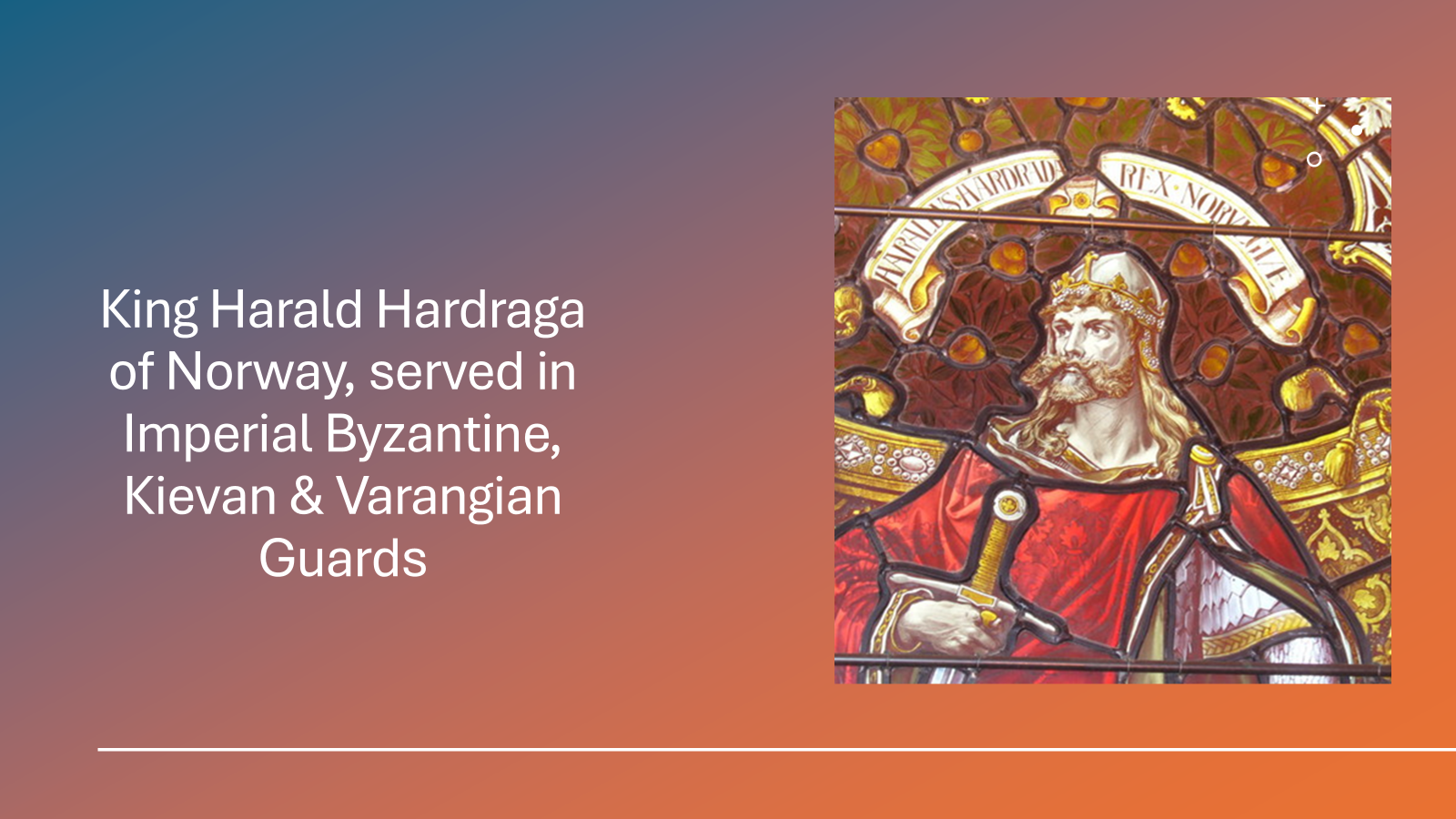
Harald Hardrada (1015–1066) links Norse, Rus’, en Byzantium in a single career—exactly along the corridors your maps show. He is the flesh-and-blood confirmation that these were not theoretical routes; they were lived.
Kinship in plain English (R1a / R1b)
Most Slavic populations today are R1a-heavy; that’s the standard, robust finding. The Piast ruler line reading R1b with an Insular (North-Atlantic) proximity is not a contradiction—it’s the signature of a founder line arriving by river into a Slavic realm. In population genetics terms: R1a and R1b are kindred branches splitting from a shared ancestor ~5,000 years ago (Central Asia / Southern Siberia). In historical terms: a Celtic-coded dynasty founding a Slavic state on the Vistula makes sense of the archaeology, the chronicles, and the marriage lattice.
For clear summaries to cite or screen:
-
CelticOrthodoxy DNA article (with mainstream press summaries): https://celticorthodoxy.com/2025/07/polands-first-kings-belong-to-a-celtic-royal-dynasty-new-dna-evidence-reveals-ancient-connections-to-scotland/
-
Press-style brief: https://watchman.report/p/new-dna-study-polands-first-kings
-
Szczerbiec (coronation sword) context: https://watchman.report/p/szczerbiec-polands-royal-sword-and
Theories of the Sicambrian Goths of Ukraine are well accepted in official histories of the Franks, as well as of Langudoc (also called Gothia of France), which were anciently one Galician Celtic people. Although tribal name was later called Visigoths and the Eastern were Ostrogoths. The Celtic Heart of Gaul was recently highlighted in the Summer Edition newsletter of the Celtic Press Journal.
Some Ukrainian authors liked to put it another way, such as Shelukhyn (cited in “A History of Ukraine: The Land and It’s Peoples”:
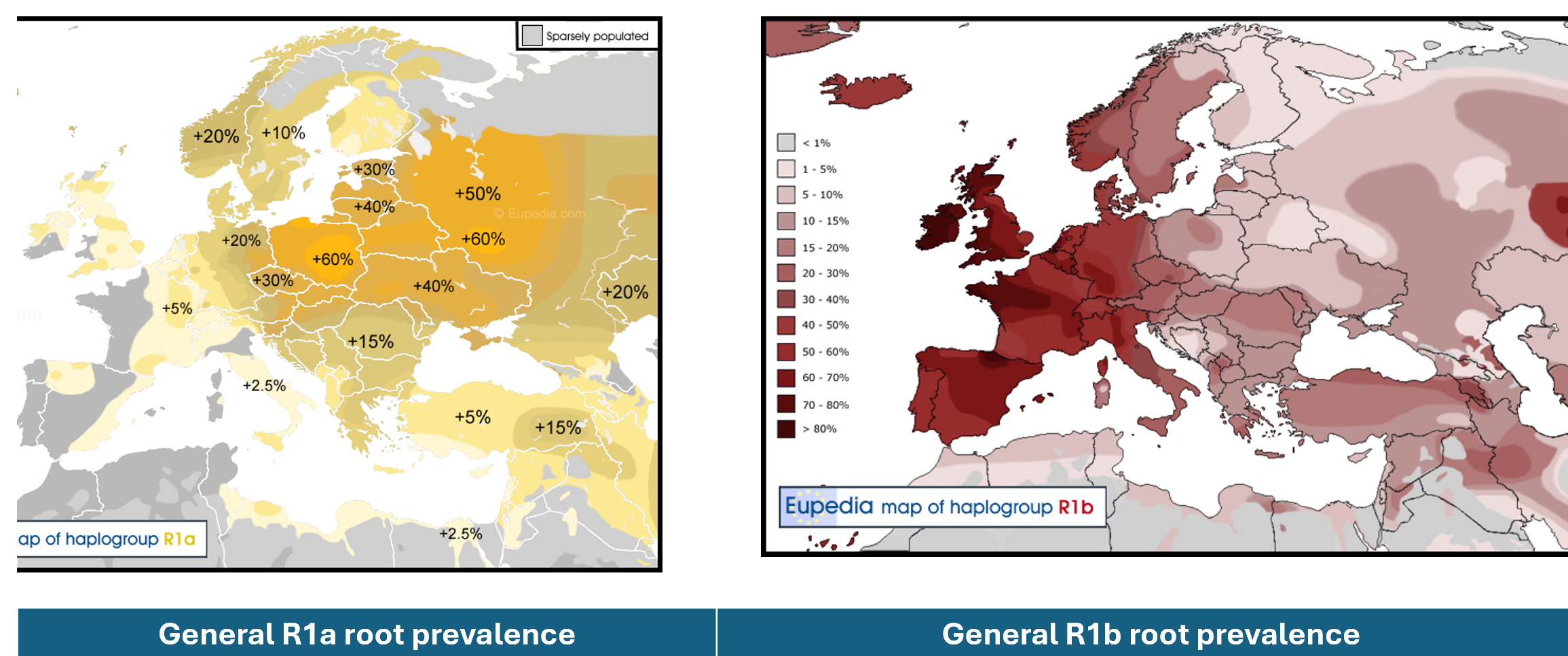
You can also nod to the MacGregor memory—“Royal is my race”—as color for the Insular signal: 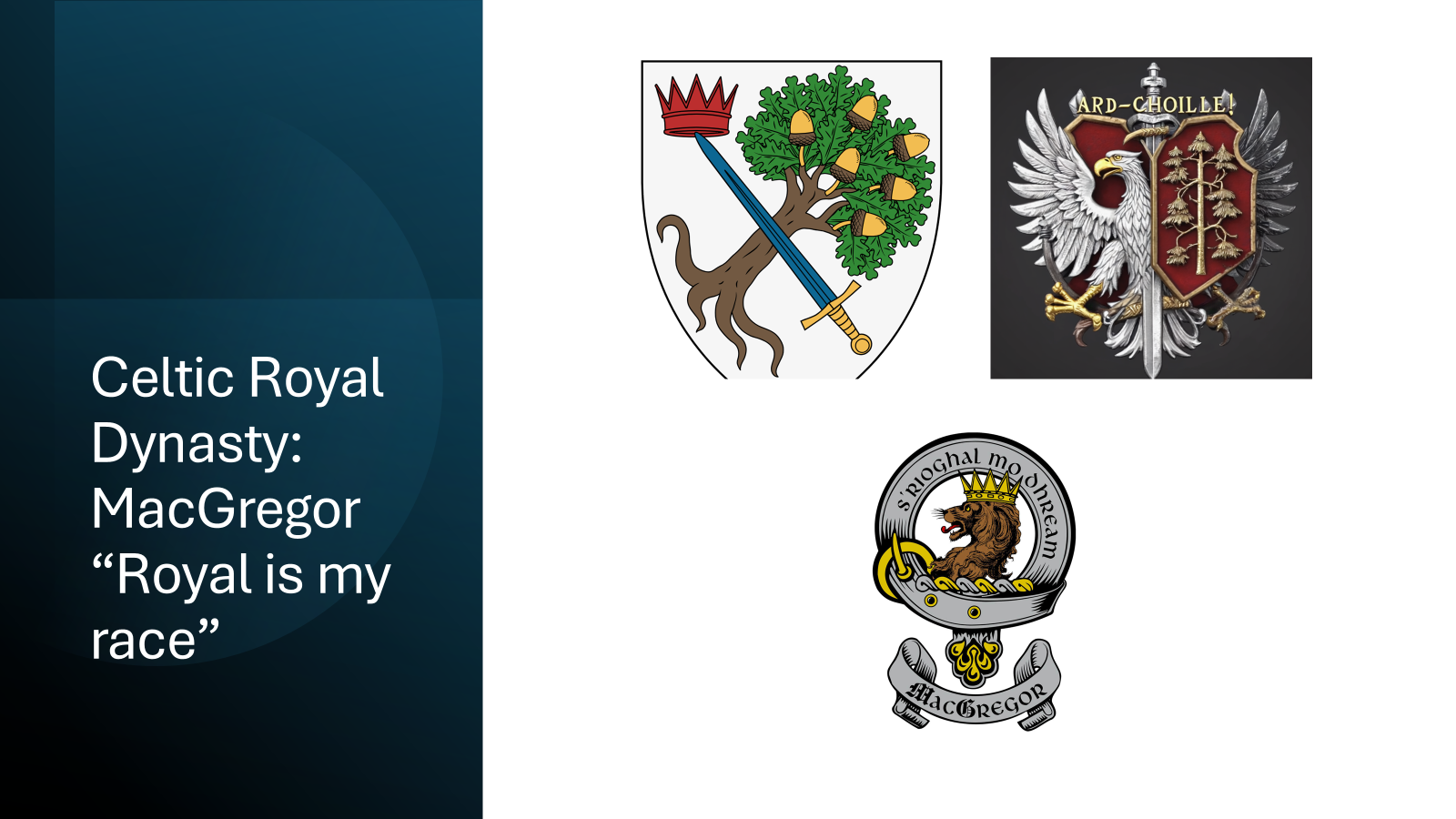
The Piast DNA match is clear. They match with the high noble Celtic House of the Northern Picts (the MacGregors): https://watchman.report/p/new-dna-study-polands-first-kings
Why this matters now (and why the narrative war targets memory)
When modern ideologues in Moscow speak of “breaking Europe’s back” or flirt with nuclear coercion, they rely on a simplistic civilizational binary. Your maps, dynasties, and lab results say otherwise: the West and the East are intertwined across this corridor. The river record, the Piast house-signature, the Galicia–Volhynia tilt—these all testify to kinship, not enmity.
Reading list & article series links
Piast, Galicia–Lodomeria, Brunswick continuity
-
Piast inheritance (House Brunswick-Wolfenbüttel – Article 3): https://celticorthodoxy.com/2025/06/the-piast-inheritance-of-the-house-of-brunswick-wolfenbuttel-article-3/
-
Brunswick probable Piast successor (2018): https://celticorthodoxy.com/2018/10/brunswick-being-the-only-probable-successor-of-the-piasts/
-
Succession in the Kingdom of Galicia–Lodomeria & Lviv: https://celticorthodoxy.com/2025/02/succession-in-the-kingdom-of-galicia-lodomeira-and-lviv-in-the-house-of-brunswick/
-
Franks / Capetian–Gothic lines (context): https://watchman.news/2023/07/franks-genealogy-belgian-dutch-goths/
-
Heraldic review (Brunswick–Mecklenburg cadet branch, 1935 successor frame): https://watchman.report/p/heraldic-review-the-brunswick-title
Templar / governance corridor
-
Brunswick Dutch regency & enduring correspondence rights: https://celticorthodoxy.com/2025/04/brunswick-dutch-regency-house-of-wolfenbuttel-enduring-regency-rights-in-the-netherlands/
-
Templar lineage overview (Brunswick Templar): https://brunswicktemplar.org/lineage.html
-
Fons honorum continuity in Brunswick: https://watchman.news/2022/02/legitimate-templar-fons-honorum-continuing-in-brunswick/
Church & literacy streams
-
Guelph & the German–Celtic Church: https://celticorthodoxy.com/2025/04/guelph-german-celtic-church/
-
Orthodox Church of Gothia (Crimea; Catacomb/RTOC continuity): https://celticorthodoxy.com/2025/04/the-orthodox-church-of-gothia-canonical-continuity-in-crimea-under-the-catacomb-and-rtoc-tradition/
-
Ostrogoth & Visigoth successor claims under Brunswick: https://celticorthodoxy.com/2018/08/ostrogoth-and-visigoth-united-royal-successor-house-brunswick-wolfenbuettel/
Piast DNA & symbols
-
Piast R1b Insular signal (overview + press receipts): https://celticorthodoxy.com/2025/07/polands-first-kings-belong-to-a-celtic-royal-dynasty-new-dna-evidence-reveals-ancient-connections-to-scotland/
-
Press-style brief: https://watchman.report/p/new-dna-study-polands-first-kings
-
Szczerbiec, Poland’s coronation sword: https://watchman.report/p/szczerbiec-polands-royal-sword-and
 Dutch
Dutch  English
  German
  Polish
  Swedish
  French
  Ukrainian