
From Troy to Britain: Joseph of Arimathea, Anna, Cadwalladr, and the Sacred Genealogies of Early Britain
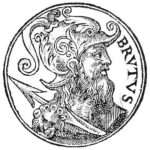
Across medieval Britain, Wales, and continental Europe, a remarkable convergence of royal, ecclesiastical, and Trojan traditions shaped how early British history was understood. Welsh annals, Glastonbury chronicles, Frankish genealogies, and the Brut tradition all preserve overlapping memories linking Britain not only to Rome, but to Troy — and even to the Holy Land through Joseph of Arimathea.
These genealogies were not marginal curiosities. They were copied, transmitted, and treated as authoritative by monks, chroniclers, heralds, and royal genealogists for centuries. They informed kingship, church origins, and national identity.
Today, much of this material survives only in scattered manuscripts and early printed books. At Celtic Orthodoxy and Celtic Press, we are gathering and presenting these sources so readers can engage the tradition directly.
| Trojan–Judah Line (Saxon/Wessex Pedigree Extension Tradition) |
British → Constantine → Pharamond (Romano-Frankish Regnal Line) |
Llŷr → Bran → British Kings → Cadwalladr → Odin (Welsh + Saxon Genealogical-Roll Tradition) |
|---|---|---|
| Judah → Zerah → Dardanus → Ericthonius → Tros → Ilus / Laomedon → Priam (brother of Tithonus) → Troan (nephew of Memnon) → Thor → Lridi → Einridi → Vingethor → Vinener → Moda → Magi → Seskef → Bedwig → Hwala → Hathra → Itermon → Heremod → Sceldwa (Skjold) → Beaw → Taetwa | Caradog | Llŷr (Lear), King of Britain |
| ↓ | ↓ | ↓ |
| Gaut (Gapt) (Geata / Greata) “Father of the Gauti” | Cyllin | Bran the Blessed (husband of Anna of Arimathea) |
| ↓ | ↓ | ↓ |
| Koning Godwulf van Trojanen | Coel | Caradog, King of Britain |
| ↓ | ↓ | ↓ |
| King Flocwald (born 110 AD, Asgard – East Europe) | Lieffer (Lucius) Mawr | Cyllin, King of Britain |
| ↓ | ↓ | ↓ |
| King Finn (born 160 AD, Asgard – East Europe) | Cadwalladr | Coel, King of Britain |
| ↓ | ↓ | ↓ |
| Freothalaf (Fredulph) (born 190 AD, Asgard – East Europe) | King of Colchester (Camulod) Coel | Lieffer (Lucius) Mawr, King of Britain m. Gladys (Claudia) “the Elder,” daughter of Eurgen/Eugein son of Marius and Victoria (daughter of Boudicca) |
| ↓ | ↓ | ↓ |
| Odin / Wodin of Asgaard (Asia) m. Frigge | Helen (St Helena of the Cross) | Cadwalladr (Cadvan) of Britain m. Gladys (Claudia) “the Younger” |
| ↓ | ↓ | |
| Constantine I, Emperor of Rome | Friege (Frigga) married Odin | |
| ↓ | ||
| Constantia + Valerius Licinianus | ||
| ↓ | ||
| Licinianus | ||
| ↓ | ||
| Justina + Valentinian I | ||
| ↓ | ||
| Justa Valentina + King Theodomir of the Franks | ||
| ↓ | ||
| Duke Genebald of the East Franks | ||
| ↓ | ||
| Argotta of the Franks + Pharamond |
Note 1: De Vita Ælfredi regis Angul Saxonum en de Anglo-Saxon Chronicle preserve Wessex pedigrees extended beyond Cerdic and Woden to Adam; see discussion and manuscript comparisons in Sisam (pp. 297–298), which notes numerous independent manuscript witnesses across the Saxon Heptarchy.
What follows is a concise explanation of how these traditions intersect — followed by reference groups documenting their manuscript foundations.
Joseph of Arimathea, Anna, and the British Royal Line
Welsh ecclesiastical and royal sources preserve a lineage linking Joseph of Arimathea through Anna to Bran the Blessed, and onward through Lucius and Cadwalladr.
Independent Welsh manuscript authorities corroborate this tradition outside of later antiquarian summaries. John Rhys and David Brynmor Jones, in The Welsh People (Oxford, 1900), identify Bran as son of Llyr and Penardim, while demonstrating from early Welsh materials that Penardim was sister to Beli, and that Beli himself appears in medieval pedigrees as Beli Mawr, mab Anna (“Beli the Great, son of Anna”), preserved in Jesus College MS. 20 (13th century). Rhys and Brynmor Jones further record a Welsh tradition stating that Anna was said by the men of Egypt to be cousin of the Virgin Mary. This same identification appears again in royal Welsh genealogies, where Anna is explicitly described as “cousin of the Virgin Mary, mother of our Lord Jesus Christ.”
These materials were later incorporated into the Annales Cambriae (Rolls Series, Longmans, 1860), which preserves the descent of the British royal house through Bran and Anna, alongside the parallel imperial pedigree through Empress Helena to Constantine the Great. Patrick Montague-Smith (The Royal Line of Succession with Genealogical Tables, Pitkin, 1968) confirms that this Welsh royal stream ultimately feeds into later English royal lines.
Taken together, these independent manuscript traditions — Welsh, ecclesiastical, and royal — preserve a continuous memory linking Anna (associated with Joseph of Arimathea), Bran the Blessed, Lucius, and Cadwalladr within Britain’s early sacred and dynastic history.
This lineage exists alongside the much broader tradition that Joseph of Arimathea personally led the first-century British Church at Glastonbury, a subject documented across numerous ancient manuscripts and cataloged here:
Arthur and the Glastonbury Joseph Tradition
Glastonbury sources extend this sacred genealogy further. John of Glastonbury preserves a lineage connecting King Arthur directly to Joseph of Arimathea through Helaius, Josus, Josue, Aminadab, and Ygerna (Igraine), concluding that Arthur descended from the stock of Joseph.
Parallel Grail traditions describe Joseph’s son as guardian of the sacred vessel until Arthur’s time, reinforcing the same ecclesiastical memory. Although many Glastonbury records were destroyed during the Dissolution, these traditions survive through quotations, derivative manuscripts, and medieval compilations.
Troy, Brutus, and Britain’s Foundation Narrative
Running alongside the Joseph and Welsh royal traditions is the Trojan foundation stream preserved by Geoffrey of Monmouth and the Welsh Brut literature. In this framework, Britain is founded by Brutus of Troy, descendant of Dardanus, and the royal line proceeds through early British kings to Lucius and Cadwalladr.
Supporting Trojan material is documented in:
and further reinforced by dynastic continuity traced through Hector of Troy and later European houses:
https://celticorthodoxy.com/2025/03/the-house-of-brunswick-an-enduring-legacy-of-este-and-troy/
These traditions are also preserved in the Welsh Triads and related manuscript collections:
https://celticorthodoxy.com/2023/10/triads-of-wales-occ-e-book-library-content/
Later Frankish genealogies attempted to harmonize this Trojan-British stream with Roman imperial succession and early Frankish kingship, producing the Romano-British → Frankish → Pharamond synthesis seen in medieval royal tables.
Why These Genealogies Matter
Whether viewed as sacred tradition, royal mythography, or ecclesiastical memory, these genealogies shaped Britain’s identity for centuries.
They were used to legitimize kings, define church origins, and unite Britain with Rome and Troy under a sacred historical vision:
Troy → Britain → Rome → Franks → Saxons
Medieval royal rolls deliberately inserted Brutus and Arthur into dynastic charts — not as fiction, but as national theology.
Today, these sources remain scattered across rare books and manuscripts. Celtic Orthodoxy already hosts dozens of out-of-copyright works addressing these traditions in depth, and Celtic Press is preparing to consolidate this material into accessible volumes for modern readers.
This article serves as an introduction — and an invitation.
📜 Reference Group 1 — Welsh Royal / Lucius → Cadwalladr Tradition
Core genealogical sources
- Iolo Manuscripts, Vol. I (Taliesin Williams, ed.) — p. 126
“From Coel came Cyllin; from Cyllin came Lleirwg, called Lucius; from Lucius came Cadwalladr Fendigaid, last King of the Britons.”
(Available via: Iolo Manuscripts, Vol I, Denbigh: T. Gee & Son, 1894)
— Provides the explicit Welsh pedigree chain.
- Myvyrian Archaiology of Wales (Denbigh edition, 1870)
— A comprehensive collection of medieval Welsh chronicles, triads, and genealogies that underlie the Lucius/Cadwalladr line.
— Includes Brut y Brenhinedd, lists of British kings, and saintly lineages.
— This is the primary manuscript source reservoir for the Welsh material later printed. - Pedigrees of the Welsh Saints (compiled from medieval MSS)
— Reflects the same genealogical lines found in the Triads and Welsh genealogical tracts, including Lleirwg, Coel Hen, Cyllin, en Cadwalladr.
— Particularly useful because it assembles multiple manuscript variants.
Saxon / Later Royal Pedigree Sources
- UK College of Arms — Pedigree of the Saxon Kings, p. 25
— Lists Frea / Frigge as daughter of Cadwallader.
— This is part of a heraldic/royal pedigree roll preserved in College of Arms collections showing how Saxon royal genealogies assimilated earlier British material. - Roderick W. Stuart, Royalty for Commoners (1992)
— Lists Frigge, Gadwalldóttir as daughter of Cadwalladr.
— This modern antiquarian work collates multiple earlier genealogical manuscripts and pedigrees. - The American Genealogist, Vol. 69 (April 1994)
— Commentary on Roderick W. Stuart’s work (including Royalty for Commoners), discussing the Frigga / Gadwalldóttir attribution and how it appears in heraldic pedigrees.
🛡️ Reference Group 2 — Romano-British → Frankish → Pharamond Tradition
These sources document the broader Trojan-British→Roman→Frankish genealogical frameworks used by medieval chroniclers and later antiquarians.
- Gregorius van Tours, History of the Franks
— A foundational early Frankish narrative. While Gregory himself does not supply the full Trojan-British link, later medieval editors and chroniclers appended genealogical tables making the connection from Trojan-British kings to Frankish royalty.
Print edition / transcript:
— Gregory of Tours: The History of the Franks, translated by Lewis Thorpe (Penguin Classics).
— Archive.org scan (older edition): History of the Franks (e.g., Kraus reprint).
- Chronicle of the Kings of Britain (Geoffrey of Monmouth tradition with appended pedigrees)
— Many medieval editions (Latin and French) include genealogical tables connecting British kings to Roman and continental traditions.
— The appended materials are exactly what later genealogists used to justify Merovingian / Carolingian links to Trojan-British ancestors.
Available edition:
— Chronicle of the Kings of Britain (e.g., early English or Latin printings)
Example:
— Latin text: Chronica Regum Britanniae (Geoffrey) with appended tables showing Roman-Frankish links.
- William of Malmesbury, Gesta Regum Anglorum
— Often cited by later genealogists who constructed Frankish-British lines via Roman imperial links; this work is used as a source in medieval continental genealogical compilations.
🪶 Reference Group 3 — Trojan-Brut Foundation Tradition
These are the core medieval narrative sources that establish the Brutus of Troy tradition upon which the other lines build.
- Geoffrey of Monmouth, Historia Regum Britanniae
— Primary medieval chronicle that codifies the Brutus → British kings → Cadwalladr narrative.
— Establishes Brutus as founder, lists all primordial British rulers (including Lucius) and ends with Cadwalladr Fendigaid.
Print editions worth citing:
-
- The History of the Kings of Britain translated by Lewis Thorpe (Penguin Classics).
- Earlier Latin editions (e.g., Paris, 12th–13th centuries) — many reprinted in modern scholarship.
Key content:
-
- Brutus of Troy as eponymous founder
- King lists from Brutus through native British kings
- Lucius as the first Christian king
- Cadwalladr as last native monarch
- Nennius, Historia Brittonum
— Earliest Brut source tradition; not as full as Geoffrey’s, but gives important elements of Trojan ancestry and British regnal lines. - Brut y Brenhinedd (Middle Welsh adaptations of the Brut tradition)
— A set of Welsh redactions of Geoffrey’s chronicle with variant king lists and genealogical data, often preserving additional names and relationships not in the standard Latin.
Modern reference:
— The Welsh Brut y Brenhinedd, edited and translated with annotations (various academic editions).
✝️ Reference Group 4 — Joseph of Arimathea & Arthuric / Glastonbury Tradition
This group covers the Joseph of Arimathea traditions and their use in Arthurian genealogy, particularly the locally British / Glastonbury material that feeds into medieval chroniclers and later antiquarians.
Medieval & Early Modern Sources
- William of Malmesbury, De Antiquitate Britannica
— Early 12th-century work that includes some of the oldest references to Joseph of Arimathea coming to Britain, later excerpted and expanded in ecclesiastical traditions. - Lyfe of Joseph of Armathie (16th-century printed tradition)
— A printed edition that circulated in early modern England connecting Joseph to Britain and the Glastonbury legends. - John of Glastonbury, Cronica Sive Antiquitates Glastoniensis Ecclesiae
— Contains genealogical claims around British kings and Arthuric ancestry, including the Latin passage you referenced:
“Helaius, Nepos Joseph, Genuit Josus, Josue Genuit Aminadab, Aminadab Genuit Filium, qui Genuit Ygernam, de qua Rex Pen-Dragon, Genuit Nobilem et Famosum Regum Arthurum, per Quod Patet, Quod Rex Arthurus de Stirpe Joseph descendit.”
— (This tradition asserts Arthur’s descent from Joseph of Arimathea through a male lineage said to survive in Glastonbury sources.)
- “Prophecy of Melkin”
— A medieval prophetic text (associated with Glastonbury) that ties Jozef van Arimathea to British sacred geography and Arthurian tradition; quoted and discussed in early print anthologies. meer - Chronicles and Arthurian Legendary Compilations
— Collections of Jozef van Arimathea legends that became standard in later Arthurian romance cycles, including the Vulgate Cycle en Post-Vulgate Cycle. meer
Scholarly / Antiquarian Treatment
- C. S. Lewis & J. R. R. Tolkien era Arthurian collections
— Anthologies that contain the “Joseph of Arimathea” legends as they appeared in medieval lore; useful for showing historical existence of the tradition. - Studies of Glastonbury Legends (e.g., works by Leslie Shepard, Richard Barber)
— Academic treatments of the Joseph of Arimathea / Glastonbury narrative as part of broader Arthurian tradition; useful for reference notes and context.
🏛️ Reference Group 5 — Brutus of Troy Tradition (Expanded)
This group focuses on the long medieval tradition of Brutus as Britain’s eponymous founder, as preserved in chronicles, later adaptations, and antiquarian compilations.
- Nennius, Historia Brittonum
— The earliest text to mention Trojan ancestors for the Britons (later expanded by Geoffrey). Often dated c. 9th century. - Geoffrey of Monmouth, Historia Regum Britanniae
— Codifies the complete Brutus → kings genealogy; the foundational medieval source for anyone writing British national history through the Middle Ages. - Brut y Brenhinedd (Welsh redactions of Geoffrey’s Brut)
— Middle-Welsh adaptations that circulate widely in Welsh manuscript tradition; many include genealogies not found elsewhere. - William Camden, Britannia (1586, expanded later)
— Renaissance antiquarian work that treats early British legendary history including Brutus and his supposed descendants — important for showing early modern acceptance of the tradition. - Raphael Holinshed, Chronicles of England, Scotland, and Ireland
— Elaborates on Geoffrey’s version of Brutus and the early British kings; influential for Elizabethan and later writers.
 Dutch
Dutch  English
  German
  Polish
  Swedish
  French
  Ukrainian