
The Celtic Missal (Lorrha–Stowe)
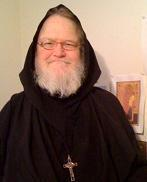
Abbot-Bishop Maelruain, Céle Dé (1955–2013)
Introduction
This page preserves and presents the Celtic Missal as translated and rubricated by
+Abbot-Bishop Maelruain, Céle Dé (Kristopher G. Dowling), a faithful laborer in the restoration
of Celtic Orthodox liturgical tradition in North America.
This work—based on the ancient Lorrha (Stowe) Missal—represents one of the most complete modern
English renderings of a historic Celtic Eucharistic rite, along with its associated sacramental services.
We host this text unaltered and with full acknowledgement of its original compiler, as a
resource for study, devotion, and liturgical reference within the wider Celtic Orthodox and Culdee tradition.
The Work of Abbot-Bishop Maelruain
Abbot-Bishop Maelruain, Céle Dé, served in Akron, Ohio, where he labored to restore the liturgical and monastic
heritage of the ancient Celtic Church. His translation and rubrication of the Lorrha–Stowe Missal made this
early Western rite accessible to English-speaking clergy and faithful.
His work includes:
- The full Order of the Eucharist
- Baptism, Chrismation, and First Communion rites
- Reconciliation (Confession)
- Anointing of the Sick
- Additional prayers, litanies, and traditional Celtic devotional texts
We honor his contribution as part of the continuing witness of the Céle Dé tradition in North America.
Access the Celtic Missal
Download the Celtic Missal (PDF)
Culdee Liturgical Context
Within the Orthodox Church of the Culdees (St Andrew’s OCC), our liturgical life draws from a broader continuity of sources preserved across the Western and early apostolic Church, including:
- De Didache and early apostolic Eucharistic forms
- De Didascalia Apostolorum and early Church discipline
- The traditions associated with St. Polycarp and St. Polycrates of Ephesus, reflecting early Quartodeciman and apostolic festal practice
- De Sarum Use and its orthodox Western continuity
- De Stowe en Speckled book
- The established Rules of the Culdees
- De Gallican Rite and related Western liturgical families
- De 1928 Book of Common Prayer, in its more traditional and doctrinally stable form
From these sources, our clergy have often worked with condensed, distilled, and pastorally adapted forms
of worship suited to home churches, monastic communities, and smaller assemblies.
Accordingly, while the Celtic Missal represents a full and formal altar manual, it is used alongside:
- Simplified home communion services
- Condensed liturgical forms for mission and household gatherings
- Expanded services for monastic and solemn observances, including vigils and seasonal rites
In this way, the Celtic Missal stands as a high and complete expression of the Celtic liturgical tradition,
while not replacing the simpler forms used in daily Culdee life.
Liturgical Note on Translation, Structure, and Early Witness
Within the clergy of St. Andrew’s Orthodox Church of the Culdees (OCC), careful attention is given not only to the faithful preservation of received liturgical texts, but also to the earliest recoverable forms and structures of the Celtic and wider Western tradition.
Recent manuscript study—particularly of the Lorrha–Stowe Missal—has highlighted an important reality:
that the language and placement of certain liturgical elements, especially within litanies, reflect multiple historical layers rather than a single uniform original form.
In the earliest recoverable strata of these texts, references to the saints are often found:
- within prayers addressed to God
- as declarations of heavenly praise
- or as expressions of protective and surrounding participation
For example, the well-known structure of the Te Deum proclaims:
“The glorious company of the Apostles praise Thee…
The noble army of Martyrs praise Thee…”
Here, the saints are not addressed directly, but are confessed as already participating in the worship of God, with the Church on earth joining them.
Similarly, in earlier liturgical contexts, phrases that later appear in simplified form may originally function within a God-directed framework, such as:
“that they may entreat the Lord our God for us”
rather than as independent or isolated invocations.
In some cases, manuscript evidence suggests that more explicit litany forms—such as repeated direct petitions—were added or repositioned in later stages of compilation, rather than forming part of the earliest continuous structure of the rite.
A Note on Method and Continuity
These observations are not presented as corrections to the work of Abbot-Bishop Maelruain, but as part of the ongoing work of liturgical study within the Church.
His translation and rubrication remain a faithful and invaluable presentation of the Celtic Missal as received in its fuller form. At the same time, continued manuscript research allows us to:
- better understand the historical development of certain expressions
- recognize distinctions between earlier and later layers
- and apply that understanding pastorally where appropriate
In this way, the tradition is not altered, but more clearly understood and faithfully lived.
Further Study
A detailed manuscript-based study exploring these developments—especially the distinction between earlier God-directed forms and later direct saint-address—is available here:
👉 Heavenly Participation in Early Christian Liturgy:
Praise, Protection, and the Origins of Saintly Petition
https://celticorthodoxy.com/2026/05/heavenly-participation-in-early-christian-liturgy-praise-protection-and-the-origins-of-saintly-petition
This study places the Stowe Missal within a wider context, comparing:
- early Irish (Bangor, Lorica tradition)
- Gallican
- and Eastern liturgical sources
and demonstrates how multiple modes of heavenly participation—praise, protection, intercession, and petition—developed over time.
Pastoral Application
Accordingly, within Culdee practice:
- the Celtic Missal is received as a complete and faithful liturgical text
- while also being understood within the broader continuity of early Christian worship
- and applied with pastoral sensitivity in light of both tradition and Scripture
This allows the Church to maintain:
- fidelity to received forms
- clarity in theological expression
- and continuity with the earliest witness of the apostolic Church
In Memoriam
+Abbot-Bishop Maelruain, Céle Dé (1955–2013)
A servant of the Celtic Orthodox tradition and a restorer of its liturgical heritage in our time.
“May his memory be eternal.”
 Dutch
Dutch  English
  German
  Polish
  Swedish
  French
  Ukrainian